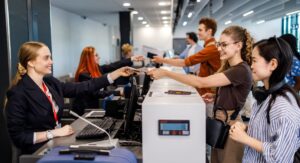

Corporate holiday events that bring staff together from Calgary, Toronto and Halifax depend on travel planning more than on the party itself. Group flights, a hotel room block with a sensible cut-off date, a CRA-friendly budget, rides home and a winter-weather backup decide whether people actually arrive. This guide sets out the plan in order for December 2026.
The Short Version:
- Pick a date before the rush. Plan your event before the 19–20 December weekend.
- Book group airfare for 10 or more travellers. Air Canada and WestJet both start group fares at 10 people.
- Sign the room block carefully. Negotiate the cut-off date and the attrition clause before you commit.
- Stay under CRA’s $150 rule. Cabs home and overnight rooms don’t count toward the limit.
- Plan the ride home and a weather backup. Give travellers one number to call.
How do you plan travel for a corporate holiday event?
Plan travel for a corporate holiday event by working back from the event date. Start eight to ten weeks out: confirm who’s travelling, book group air and a hotel room block, then arrange transfers, a safe ride home and a plan for winter delays.
Travel timeline for a December 11 event (For Illustration)
| When | Step |
| By mid-October | Confirm budget, format, and headcount; decide fly-in vs. regional events |
| Late October | Request group air quotes; sign the hotel block contract |
| Early November | Send travel details; collect names for group tickets |
| Mid-November | Hotel cutoff date (negotiate one that gives attendees time to book) |
| Late November | Issue tickets; book ground transfers and the ride-home plan |
| Week of event | Share the support number and weather backup plan |
These dates are a suggested planning timeline for an 11 December event, so shift them for an earlier or later party. A question we often get is which deadline matters most. Watch the room-block cut-off, because it lands while people are still deciding whether to come.
Should you fly remote employees in for the Christmas party?
Fly remote employees in for the Christmas party when the trip does more than one evening of drinks and dinner. Pairing the party with a planning day, recognition, or client meetings spreads the travel cost across real business value. A short cocktail hour rarely justifies a cross-country flight.
Another question we often get from office managers is who should pay for the flight. If attendance is expected, treat it as business travel and pay for it. If the budget can’t cover flights, regional gatherings in each office city (one of the simplest holiday corporate event ideas for a spread-out team), or a January event once the holiday travel peak has passed, often deliver more per dollar.
Settling the fly-in question by mid-October leaves more time to request group air quotes and sign a room block before December demand builds. Set a per-person travel number for your corporate holiday events early and compare it with the cost of regional parties. Our travel policy template for Canadian businesses covers how to write those booking rules down.
Which December dates work best for holiday event travel?
The first two weeks of December work best for holiday event travel. For the 2025 holiday season, TravelPulse Canada reported that Air Canada expected more than 2.3 million customers between 18 December and 4 January.
An event on 3–4 or 10–11 December avoids that window, and attendees aren’t choosing between your party and their own family travel.
How do group flights work with Air Canada and WestJet?
Group flights hold seats for 10 or more travellers on the same flight under one booking. The group gets a set fare, a payment schedule and, with airlines such as WestJet, the ability to change names. Group fares make sense when most attendees fly from the same city to the same destination.
When group fares beat individual tickets
Air Canada’s group bookings are for groups of ten or more passengers travelling together to the same destination on the same date and on the same flight. Air Canada offers reduced group fares up to 11 months before travel, and a booking fee holds the seats until the balance is due. Staff flying from several smaller cities are usually better booked individually under the same plan. For group trips, our team requests group space from the airline and works out the hotel arrangements on your behalf.
Names, payment and headcount
WestJet’s group page says you qualify if you are booking a group of 10 or more guests, and full payment is due 30 days before departure. WestJet also lets you change guest names up to 24 hours before departure, which helps when the guest list keeps shifting. Booking 30 separate fares the week of the party gives up those group benefits: a set fare, a payment schedule, and name changes.
How do you set up a hotel room block for an office holiday party?
Set up a hotel room block by agreeing on the number of rooms, the group rate, the cut-off date, and the attrition clause before you sign. The cut-off date is when unbooked rooms go back to the hotel. Attrition sets what you owe if fewer rooms get booked.
Cut-off date
Event-technology firm Stova explains that the cut-off date is the date when all your room reservations must be made and that hotels will usually agree to a cut-off of 21 to 30 days. After that date, unused rooms go back on general sale, often at a higher rate. Push attendees to book early, or book rooms on their behalf. Our team can book the rooms for your attendees as part of the group arrangements.
Attrition
The attrition clause sets the share of the block you must fill. Stova notes that the typical attrition allowance ranges from 15% to 20%, but terms vary, so negotiate the clause before you sign. Size the block to the people who have actually confirmed, not the full invite list. For budgeting, Worldgo’s benchmark for entry-level corporate rates is about 300–350 a night in Toronto and Vancouver and 200–250 in cities like Ottawa, Winnipeg and Halifax.
How does the CRA treat a corporate Christmas party?
The CRA doesn’t treat an employer-paid party as a taxable benefit when it’s open to all employees and costs $150 or less per person, including taxes. Cabs home and overnight hotel rooms aren’t counted toward that $150. Above the limit, the full cost becomes a taxable benefit.
Compliance – The CRA’s social events guidance says “ancillary costs (such as transportation home, taxi fare, and overnight accommodation)” are not included in the total cost limit. So paying for safe rides home doesn’t push the party over the threshold. The guidance also limits this treatment to six employer-paid social events a year. If the event itself goes over $150 per person, “the full amount is taxable,” and the ancillary costs become part of that benefit.
On the business side, the Income Tax Act normally limits meal and entertainment deductions to 50%. Section 67.1 carves out up to six special events a year that are generally available to all employees at a place of business. Flights and hotel rooms for staff travelling in from other cities are less clear-cut, so confirm the treatment with your accountant before you set the budget. Our guide to which business travel expenses are deductible covers the general rules.
How do you get everyone home safely?
Get everyone home safely by planning transport before the first drink is poured. Taxi vouchers, a shuttle back to the hotel, or rooms at the venue hotel remove the decision to drive. That protects your staff and reduces the company’s exposure if someone gets hurt. For group events, our team books ground transfers, including shuttles between the venue and the hotel, alongside the flights and rooms.
Compliance – Canadian courts have held employers partly responsible when an employee drove home impaired after drinking alcohol the employer supplied at work. Atlantic Canada law firm Cox & Palmer describes Jacobsen v. Nike, where staff was given beer during working hours, and the court found “the employer was 75% liable for the accident.” Its practical advice: use drink tickets rather than an open bar, “provide taxi vouchers to guests who require them,” and offer accommodation where needed. Build the hotel night into the plan from day one, rather than adding it after the venue is booked.
What’s the backup plan if winter weather cancels flights?
The backup plan for winter weather has three parts: schedule arrivals the day before the event, route travellers through major hubs with more rebooking options, and give everyone one number to call. One person or team should own rebooking for the whole group.
NAV CANADA’s winter travel note warns that “Snowstorms, freezing rain, and wind shear can disrupt flight schedules,” and that de-icing procedures are coordinated closely with airport operators. Ask travellers to download their airline’s app before they leave.
With a travel management company, a stranded traveller calls one team instead of waiting in an airline queue. Worldgo gives travellers a direct line to a human travel specialist, any hour of the day. One call and rebooking starts, not a queue that opens Monday morning. We don’t charge a separate agency fee for after-hours emergency support or routine changes and cancellations, which matters when names and dates shift in December. Airline, hotel and other supplier penalties, fare differences, non-refundable amounts, taxes and third-party charges still apply.
Bringing your team together this December? Worldgo handles meetings and events travel, including group air, hotel room blocks, and ground transfers, and our end-to-end event travel team can take the logistics off your plate. Talk to a Worldgo travel specialist about your holiday event.
About This Blog
This blog was researched and written by the Worldgo editorial team. It draws on the Canada Revenue Agency’s social events guidance and 2026 public holidays list, Income Tax Act section 67.1, Air Canada and WestJet group travel terms, NAV CANADA winter travel information, room-block guidance from Stova, and Canadian employment-law commentary from Cox & Palmer. Hotel rate benchmarks are Worldgo’s own. Worldgo plans group travel for Canadian corporate meetings and events. It is not tax or legal advice. For corrections, contact our editorial team.
Frequently Asked Questions
Start eight to ten weeks before the event. For an early-December party, request group quotes and sign the hotel block by late October, then collect names and pay in early November, since WestJet wants full payment 30 days before departure. Air Canada opens reduced group fares up to 11 months ahead, so a large event can start much sooner.
Not usually. Under CRA guidance, an employer-paid party isn’t a taxable benefit if it’s open to all employees and costs $150 or less per person, including taxes. The limit applies to up to six social events a year. If the cost goes over $150 per person, the full amount becomes taxable to employees.
No. The CRA says ancillary costs, such as transportation home, taxi fare and overnight accommodation, are not included in the $150 per-person limit. Those costs only become taxable if the event itself goes over the limit. Flights for staff travelling in from other cities are less clear-cut, so check with your accountant.
Both airlines start group bookings at 10 travellers. Air Canada requires 10 or more passengers on the same flight to the same destination on the same date. WestJet also needs at least 10 guests on the same flight. Smaller groups, or staff flying from scattered cities, are booked individually.
Hotel attrition is the fee you owe when your group books fewer rooms than the contract committed to. A typical attrition allowance is 15% to 20% of the block, but terms vary from hotel to hotel. Size the block to confirmed attendees and negotiate the attrition clause before you sign.