Fort McMurray is the most heavily-rotated FIFO (Fly-In, Fly-Out) market in Canada, and the travel programme for it is largely a problem of frequency, ground transport, and camp-block management — not airline capacity.
YMM is a sub-two-hour hop from both YYC and YEG, served by Air Canada and WestJet on a high-frequency schedule, and the binding constraint on most rotation days is rarely whether the crew can fly. It is whether the crew gets cleanly from YMM to a Highway 63 camp, 60 to 100 kilometres north of town, and whether the camp block holds.
This guide lays out the YYC-YMM and YEG-YMM lanes, realistic door-to-camp timing for the major Athabasca operators, when chartering is worth it, and what a well-run Fort Mac programme looks like in 2026.
Why is Fort McMurray FIFO different from a typical North American basin?
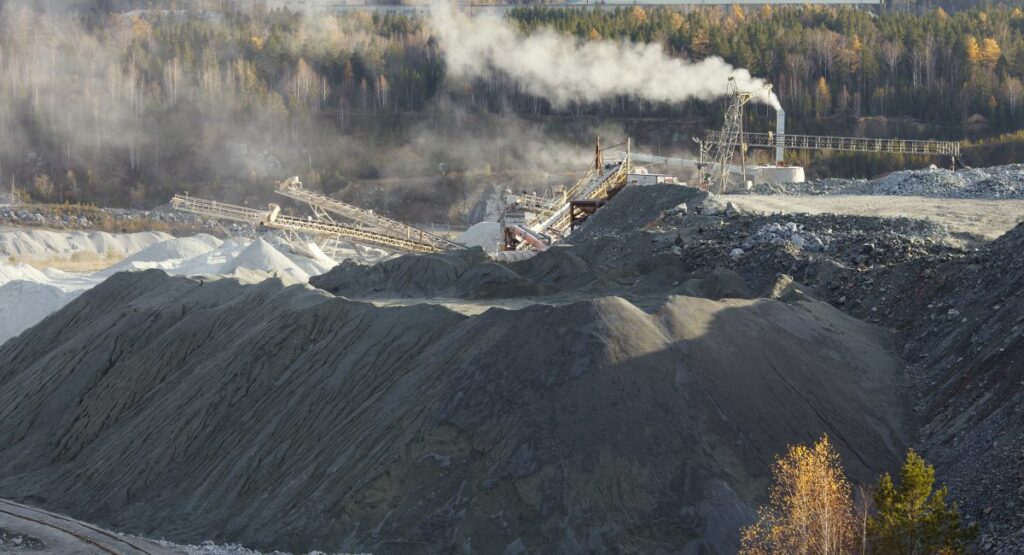
The Athabasca oil sands are structurally different from a U.S. shale play. A Permian crew typically drives from a regional airport to a well pad on a county highway. A Fort Mac crew flies from a major hub to a regional airport (YMM) and then drives 30 to 120 kilometres north on Highway 63 to a camp that will be their home for the next 14 to 21 days. The journey is longer, the ground leg is more weather-exposed, and the camp population is enormous — collectively, the Athabasca camps house tens of thousands of workers in any given week.
The volume is what shapes the programme. Major operators, including Suncor, CNRL (Canadian Natural Resources Ltd), Cenovus, Imperial, and others, run continuous rotations at scale. On a typical Wednesday or Thursday, several thousand workers are moving in and out simultaneously. YMM, the camp shuttles, and the Highway 63 ground network all work close to capacity on those days. Fort Mac travel is a scheduling and orchestration problem first, an airfare problem second.
Which airports actually serve Fort McMurray crews?
Three airports matter for Athabasca FIFO programmes.
- Fort McMurray International Airport (YMM) is the closest, located about 16.5 kilometres south of Fort McMurray, accessed via Highway 63 onto Highway 69 (Airport Road / Saprae Creek Trail). Per Fort McMurray International’s published flight network, the airport is served by Air Canada and WestJet on the Calgary and Edmonton lanes, plus McMurray Aviation and Northwestern Air on regional links. Wikipedia’s Fort McMurray International Airport entry summarises that it is the largest airport in northern Alberta and was rebuilt with a passenger terminal completed in the early 2010s specifically to accommodate the oil-sands rotation volume.
- Calgary International (YYC) is the most common origin airport for crews based in southern Alberta and for crews flying in from across Canada and internationally. YYC-YMM is the highest-frequency rotational lane in Canada with a combined Air Canada plus WestJet schedule.
- Edmonton International (YEG) is the natural origin for central and northern Alberta crews and is the slightly shorter flight to YMM. YEG-YMM is the second-highest frequency lane and frequently the better answer for Edmonton-based crew with onward connections from Saskatchewan, Manitoba, or BC interior origins.
For most YMM rotations, crews route through YYC or YEG. International origins typically connect through YYC’s Air Canada or WestJet hub onward to YMM.
What does a realistic door-to-camp schedule look like?
The flight is the easy part. From YYC, plan around 1h40m–1h50m nonstop to YMM (Air Canada and WestJet both operate this lane multiple times a day, with WestJet offering higher daily frequency than Air Canada on this corridor). From YEG, plan around an hour. Add 30 minutes for the small terminal at YMM and 15 to 30 minutes for camp shuttle pickup or rental vehicle.
The drive north from YMM is where the day gets long.
| Camp / Operator Site (approximate) | Distance from YMM | Drive time (normal) |
| Suncor Base Plant / Fort Hills | 40–80 km | 50–90 minutes |
| Syncrude Mildred Lake / Aurora | 40–80 km | 50–90 minutes |
| CNRL Horizon | 70–95 km | 75–110 minutes |
| Albian / Jackpine Mine | 75–95 km | 75–110 minutes |
| Sunrise / Firebag (Cenovus / Suncor) | 100–135 km | 100–140 minutes |
| Fort Hills (Suncor) | 90 km | 90–110 minutes |
Distances above are approximate ranges based on publicly available camp and operator-site mapping; verify the exact route for your specific lease. Highway 63 is paved for the entire run and twinned over much of the southern stretch, but it remains a 100 km/h two- to four-lane highway with substantial commercial truck traffic. Drive times double in winter blizzards and during forest-fire smoke events. A reasonable planning rule from Calgary or Edmonton is to leave the home airport at 6 a.m., land at YMM by 9 a.m., and be at camp between noon and 1 p.m., depending on which operator’s lease the crew is heading to.
Which is the better origin — Calgary or Edmonton?
Most Alberta crews end up choosing based on where they live, not on travel-programme logic. From a programme perspective, Edmonton is slightly faster point-to-point (a shorter flight), but Calgary has deeper international connectivity for crews originating outside Alberta and a wider Air Canada / WestJet schedule that gives more rebooking options when something goes wrong.
For programmes that move crews from multiple Canadian provinces, Calgary is usually the better hub. For programmes that move crews predominantly from northern and central Alberta, Edmonton wins on door-to-camp time. For programmes that move crews from BC, Saskatchewan, and Manitoba interior, the calculation depends on whether the crew can reach YEG or YYC on a same-day connection — both are workable, but the balance shifts case by case.
The rotation calendar matters as much as the airport. On peak-rotation Wednesdays, both YYC-YMM and YEG-YMM lanes can run heavy, and the cheapest fares disappear two to three weeks before the rotation date. Programmes that book trip-by-trip systematically pay 25 to 35% more on those days than programmes that book the rotation calendar 6 to 10 weeks in advance.
How do camp blocks and ground transport actually work?
Most major Athabasca operators run their own camps (or contract dedicated camp space) with on-site shuttle service from YMM. For non-camp contractors, third-party lodges, including operators like Clean Harbours (Fort McMurray Oilsands Lodge), Civeo, and others, run open lodges along Highway 63 in the Fort McKay corridor. Lodge nightly rates for 2026 are typically in the range of CA$60–$150 per night on a double-occupancy basis, depending on operator, contract, and meal-plan inclusion — substantially below Fort Mac hotel rates, which can run CA$180–$350 a night during peak rotation weeks.
Two operational rules that matter:
- Hold the camp block, don’t book trip-by-trip. Fort Mac camp inventory is contracted weekly across the major operators. Programmes that book individual trips into open-lodge availability lose to programmes that hold a recurring weekly block. The cost gap on a 50-rotation programme is typically tens of thousands of dollars per quarter.
- Match the shuttle to the crew, not to the operator default. Some operator-run shuttles depart only at specific times. If the rotation flight lands outside that window, the crew sits at YMM. A travel programme that pre-books a backup ground option (rental, private shuttle, or charter coach) avoids the worst case.
For travel programme administration, our corporate travel solutions teams in Edmonton and Calgary handle block management and rotation-day coordination for Fort Mac programmes day-to-day.
When does chartering beat scheduled service for a Fort Mac rotation?
Less often than on the Bakken or Alaska North Slope, because YYC-YMM and YEG-YMM frequency is so high. The trigger lines worth using:
- More than 25 crew on the same calendar day from a single non-Alberta origin, where consolidating onto a single charter into YMM avoids two separate connections plus rebooking risk.
- A specialized crew that can’t split — e.g., a turnaround crew or a commissioning team where on-site shifts can’t start until the full team is present.
- A non-rotation day with extreme volume needs — for example, a major maintenance turnaround where 50+ specialists must arrive on a Saturday outside the regular rotation calendar and the standard Wednesday/Thursday flight bank is irrelevant.
For most YMM programmes, the right answer is to keep crews on Air Canada and WestJet scheduled service through YYC or YEG and reserve charter for specific high-volume non-rotation events. Rotational programmes that default to charter when scheduled service is available almost always overspend.
What does the 2026 outlook mean for Fort McMurray FIFO planning?
Two structural facts to plan around:
- Athabasca production is stable to growing. The Oil Sands Alliance (renamed from Pathways Alliance in February 2026) — Canadian Natural, Cenovus, ConocoPhillips Canada, Imperial, and Suncor — represents the vast majority of Canadian oil-sands output and continues investing in production growth and expansion. Crew-travel volume is not declining.
- Wildfire and wildfire-smoke disruption risk continues. The 2026 fire season outlook from Natural Resources Canada and provincial agencies indicates continued elevated risk in BC and Alberta, and Fort Mac itself has a recent history of fire impact (most notably the 2016 fire). Travel programmes should plan for the possibility of YMM closures and Highway 63 smoke-driven slowdowns during peak fire season (typically May through August).
A 2026 Fort Mac travel programme should treat smoke and fire risk as a normal operational variable, not an exception. Build a 12-to-18-hour on-camp buffer ahead of shift start, hold a small overflow YYC or YEG hotel block on rotation days for crews that can’t connect to YMM, and have a TMC (Travel Management Company) that can flip the programme to alternate routings on a few hours’ notice.
What does a well-run Fort Mac travel programme look like?
Five defining features:
- A booked rotation calendar 6 to 10 weeks ahead. The cheap YYC-YMM and YEG-YMM fares disappear within three weeks. Programmes that book the calendar pay materially less than programmes that book trip-by-trip.
- A standing camp block for non-supervisory crews where camp lodging is acceptable, plus a small Fort Mac hotel block for supervisors and emergency overflow.
- A pre-coordinated YMM shuttle backup that the TMC can flip to when the operator-run shuttle window is missed.
- A wildfire-and-smoke contingency baked into the rotation calendar — overflow YYC/YEG hotel block, alternate Highway 63 routing scenarios, and a clear TMC decision tree.
- Monthly programme reporting on on-camp arrival rate — not on-time flight rate. A crew can land at YMM on time and still miss the shift handoff because of a shuttle failure or a Highway 63 closure. The right metric is whether the crew is on-camp at shift change.
Programmes that hit four out of five run materially below the per-head cost of programmes that hit two.
Running an Athabasca rotation and watching Highway 63 closures, smoke days, or YMM shuttle gaps chip into productive shift time? Worldgo builds Fort Mac crew-travel programmes around the specific scheduling, ground-transport, and wildfire-season constraints of the basin — talk to a specialist.
People Also Ask about Fort McMurray Crew Travel
Fort McMurray International Airport (YMM) is the closest, about 16.5 kilometres south of the city, accessed via Highway 63 onto Highway 69 (Airport Road). It is served by Air Canada and WestJet on the Calgary and Edmonton lanes, with regional links through McMurray Aviation and Northwestern Air. From YMM, most major operator camps are 40 to 135 kilometres north on Highway 63.
YYC-YMM is roughly 1h40m–1h50m nonstop. YEG-YMM is shorter, around an hour, because the runway-to-runway distance is materially less. Both routes are flown by Air Canada and WestJet on a high-frequency rotational schedule.
Anywhere from 50 minutes to 2.5 hours depending on the operator and the specific lease. Suncor Base Plant and Syncrude Mildred Lake / Aurora are 40 to 80 km north (50–90 minutes). CNRL Horizon and Albian / Jackpine are 70 to 95 km (75–110 minutes). Cenovus / Suncor in-situ sites at Sunrise and Firebag are 100 to 135 km (100–140 minutes). Drive times double in winter blizzards or fire-smoke events.
It depends on origin. Calgary has deeper international connectivity and a wider rebooking pool. Edmonton is slightly faster point-to-point and often the better choice for crews originating in northern and central Alberta or the Saskatchewan/Manitoba interior. For programmes that move crews from multiple provinces, Calgary is usually the better hub.
When more than 25 crew need to move on the same day from a single non-Alberta origin, when a specialized crew can’t split across multiple flights, or when a major turnaround forces a high-volume non-rotation-day movement that the standard Wednesday/Thursday schedule can’t absorb. For most Fort Mac rotational volume, scheduled YYC/YEG-YMM is the right baseline.
Open-lodge nightly rates in 2026 typically run CA$60–$150 per night on a double-occupancy basis, depending on the operator and meal-plan structure. Fort McMurray hotel rates during peak rotation weeks can run CA$180–$350. The cost gap is large, which is why most multi-rotation programmes use camp blocks for non-supervisory crews and reserve hotels for supervisors and overflow.
Wildfire smoke and Highway 63 closures during peak fire season (typically May through August). The fire-disruption risk is structural to the region and has to be planned for explicitly — not handled as an exception. A 12-to-18-hour on-camp buffer ahead of shift start and a fallback YYC/YEG overflow hotel block are the cheapest insurance against it.