2025 Sustainable Business Travel Practices

In the rapidly evolving landscape of global business, the emphasis on sustainable practices has never been more critical. As we step into 2025, the concept of sustainable business travel takes center stage, reflecting a collective commitment to reducing our carbon footprint and promoting environmental stewardship while maintaining the essential flow of business operations. This blog explores the innovative strategies and practices that companies around the world are adopting to make business travel more sustainable.

From leveraging technology to minimize travel needs to investing in green transportation and supporting eco-friendly accommodations, we delve into how businesses are transforming travel policies to align with sustainability goals. Join us as we navigate through the practices that not only benefit our planet but also offer a blueprint for the future of responsible business travel.

The Importance of Sustainable Business Travel in 2025

In 2025, the corporate world is increasingly recognizing the critical importance of eco-friendly travel practices, driven by a global shift towards sustainability and corporate responsibility. As environmental concerns continue to take center stage, businesses are reevaluating their travel policies to align with green initiatives, understanding that sustainable travel practices are not only beneficial for the planet but also reflect positively on their brand image and stakeholder values.

This growing emphasis is catalyzing innovations in green transportation, eco-friendly accommodations, and virtual meeting technologies, marking a significant transformation in how corporate travel is approached. Companies are now seeing sustainable business travel as a key component of their overall sustainability strategy, aiming to reduce their carbon footprint, support environmental conservation, and contribute to a healthier planet for future generations.

Eco-Friendly Transportation Options

Eco-friendly transportation options are pivotal for your 2025 sustainable business travel, as they reduce the environmental impact of corporate mobility. As of 2025, businesses and travelers are increasingly turning towards greener alternatives that prioritize energy efficiency, lower carbon emissions, and reduced ecological footprints. Here’s a closer look at some of the sustainable modes of transportation reshaping business travel:

Electric vehicles have surged in popularity due to their zero tailpipe emissions and reduced dependency on fossil fuels.

Electric Vehicles (EVs)

Electric vehicles have surged in popularity due to their zero tailpipe emissions and reduced dependency on fossil fuels. Companies are incorporating EVs into their corporate fleets, encouraging employees to use them for business travel. Charging infrastructure has also expanded, making EVs a convenient option for travelers.

Green Airlines

Airlines are adopting more sustainable practices, such as using biofuels, investing in more fuel-efficient aircraft, and implementing carbon offset programs. Green airlines are emerging, focusing on minimizing the environmental impact of air travel. Business travelers are encouraged to choose flights with airlines that demonstrate a commitment to sustainability.

High-Speed Rail

High-speed trains offer an efficient and eco-friendly alternative to air and road travel, particularly for short to medium distances. They emit significantly less carbon per passenger compared to planes and cars, making them a preferred choice for environmentally conscious businesses.

Biking and Walking

For short distances within cities, biking and walking not only reduce carbon emissions but also promote health and well-being. Many cities have developed extensive bike-sharing systems and pedestrian-friendly zones, making these options more accessible for business travelers.

Underground train platform

Public Transportation

Utilizing buses, trams, and subways can significantly reduce the carbon footprint of business travel. Public transportation systems in many urban areas are becoming more efficient, cleaner, and more reliable, making them an attractive option for corporate travelers.

Car-Sharing and Ride-Sharing

Car-sharing and ride-sharing services offer flexible, cost-effective travel options while reducing the number of vehicles on the road. By choosing shared rides or electric vehicle options within these services, business travelers can further minimize their environmental impact.

Choosing Green Accommodation

Luckily for companies, the availability of green accommodations has increased as of late, increasing sustainable business travel. These eco-friendly options represent a harmonious blend of environmental responsibility, comfort, and convenience, catering to the discerning needs of modern travelers and companies alike.
Eco-certified hotels lead the charge, showcasing a commitment to sustainability through stringent standards in energy efficiency, water conservation, and waste reduction, often highlighted by their adoption of renewable energy sources.
Boutique eco-resorts offer a unique, intimate experience in pristine natural settings, emphasizing conservation and sustainable operation practices. For the budget-conscious, green hostels present an affordable solution, promoting energy savings and waste minimization. Eco-lodges and cabins, nestled in or near protected areas, provide immersive nature experiences with minimal ecological footprints.
Moreover, traditional business hotels are increasingly adopting green practices, offering efficient and sustainable amenities tailored to business travelers. Agritourism and farm stays introduce guests to sustainable agricultural practices and local living, while home-sharing rentals with green policies allow for a more personalized, eco-conscious stay.

Sustainable Travel Policies for Businesses

As businesses strive to align with global sustainability goals, integrating eco-conscious travel policies into their operations has become paramount. These guidelines serve as a blueprint for companies committed to reducing their environmental impact while fulfilling their travel needs.

  • Select green transportation options, such as electric vehicles and eco-friendly airlines.
  • Choose accommodations that adhere to sustainability practices.
  • Implement carbon offset programs for unavoidable travel to support ecosystem conservation and restoration.
  • Educate employees on the importance of sustainable travel practices.
  • Encourage environmentally responsible choices during business trips.
  • Foster a culture of sustainability that aligns with company values and global sustainability goals.

The Role of Travel Management Companies in Promoting Sustainability

Travel Management Companies (TMCs) play a pivotal role in promoting sustainability within the corporate travel sector. By integrating eco-friendly practices and options into their offerings, TMCs empower businesses to make more sustainable travel choices. They achieve this by providing access to green transportation options, eco-certified hotels, and carbon offset programs, making it easier for companies to adhere to their environmental commitments.

Furthermore, TMCs offer valuable insights and data on travel patterns, helping businesses identify opportunities to reduce their travel footprint, such as opting for virtual meetings when possible. Through strategic partnerships with sustainable service providers and continuous education on the importance of eco-conscious travel, TMCs are at the forefront of driving the shift towards more sustainable business travel practices, ensuring that companies can meet their corporate responsibilities while minimizing their environmental impact.

Help Your Company Travel Sustainably in 2025

As we navigate through the evolving landscape of 2025, the commitment to sustainable business travel practices has never been more essential. Embracing these practices is not just about reducing environmental impact but also about setting a new standard in corporate responsibility and innovation.

In this journey towards a more sustainable future, Worldgo stands ready to assist your company. With our expertise in eco-friendly travel solutions and a commitment to sustainability, Worldgo can help your business implement effective sustainable travel practices, ensuring that your travel policies align with environmental goals and corporate values.

Whether it’s through providing access to green transportation options, eco-certified accommodations, or guiding you in carbon offsetting initiatives, Worldgo is your ideal partner in crafting a travel program that meets the demands of 2025’s sustainable business landscape. Together, we can make sustainable business travel not just a policy but a core part of your company’s identity.


The Role of AI and Automation in Streamlining 2025’s Business Travel Expenses

In 2025, businesses embrace cutting-edge solutions to optimize their travel budgets, with AI in business travel and travel automation leading the way. From predictive analytics to personalized itineraries, these technologies transform how companies manage expenses and enhance efficiency. In this blog, we’ll explore how AI and automation reshape the travel management landscape, ensuring seamless and cost-effective journeys for organizations worldwide.


What is AI and Automation?

AI (Artificial Intelligence) uses advanced computer systems to mimic human intelligence, enabling machines to perform decision-making, problem-solving, and learning tasks. In the context of how AI can transform business travel, AI analyses large datasets to predict trends, optimize itineraries, and personalize experiences. 

Conversely, automation involves using technology to perform repetitive tasks with minimal human intervention, streamlining processes like booking, approvals, and expense reporting. Together, AI and automation revolutionise corporate travel by saving time, reducing errors, and improving cost efficiency, making them indispensable tools for modern travel management.

How AI Is Revolutionising Business Travel Management

AI in business travel transforms travel management by introducing smarter, more efficient, and highly personalized solutions. It enables real-time itinerary optimization, offering tailored flight, accommodation, and transport options based on individual traveller preferences and corporate budgets. Through predictive analytics, AI anticipates cost fluctuations and suggests the best times to book, helping companies save significantly on travel expenses. Virtual assistants and chatbots powered by AI in business travel provide 24/7 support, handling tasks like itinerary changes, travel updates, or cancellations, ensuring smooth and stress-free journeys. 

Additionally, AI-driven expense management tools automate the processing and categorization of receipts, reducing administrative workloads and improving accuracy. By integrating AI into business travel, businesses can enhance their travel programmes, increase efficiency, and provide employees with a seamless travel experience.


The Key Ways AI is Transforming Business Travel Management 

  • Personalised Itineraries: AI curates customized travel plans based on individual preferences, past bookings, and company policies.
  • Predictive Analytics: It forecasts price trends for flights and accommodations, enabling businesses to book at the most cost-effective times.
  • Real-Time Updates: AI-powered tools provide instant notifications on delays, cancellations, or alternative routes, ensuring minimal disruption.
  • Expense Automation: Automates the collection, categorisation, and reporting of travel expenses, saving time and reducing errors.
  • 24/7 Support: Virtual assistants and chatbots handle travel queries, itinerary changes, and booking modifications at any time of day.
  • Policy Compliance: AI ensures all bookings align with corporate travel policies, reducing the risk of unauthorized expenses.
  • Data Insights: Analyses travel patterns to identify opportunities for cost savings and efficiency improvements.
  • Fraud Detection: AI enhances security by identifying anomalies in travel expense claims, protecting against potential fraud.
  • Seamless Integration: Works with travel management platforms to streamline the entire process, from planning to reporting.

Travel Automation: The Key to Cost-Effective Corporate Journeys

Travel automation streamlines the complexities of corporate travel, helping businesses save time and money while improving efficiency. Companies can reduce manual errors and optimize their processes by automating repetitive tasks such as booking approvals, itinerary management, and expense reporting. For example, online booking tools like Deem and SAP Concur automate flight, hotel, and car rental reservations while ensuring compliance with corporate travel policies. Automated expense management platforms, such as Expensify, simplify receipt tracking and reimbursement processes, providing real-time expense reporting for faster approvals.

Additionally, intelligent travel assistants like chatbots handle routine inquiries, itinerary changes, and travel updates, offering round-the-clock support without human intervention. Automation also enables businesses to use dynamic pricing tools, which monitor market trends and secure the best rates for flights and accommodations. By leveraging travel automation, companies can achieve cost-effective travel solutions, enhance employee satisfaction, and free up resources for more strategic initiatives.

Why Automation is the Key to Cost-Effective Corporate Journeys

  • Streamlined Booking Processes: Automation tools handle flight, hotel, and transport reservations, ensuring quick and efficient bookings.
  • Policy Compliance: Automated systems ensure all bookings adhere to corporate travel policies, reducing unauthorised expenses.
  • Real-Time Pricing Updates: Dynamic pricing tools monitor market trends, securing the best rates for flights and accommodations.
  • Expense Management: Platforms like Expensify automate receipt tracking, expense categorisation, and reimbursements, saving time and reducing errors.
  • Automated Approvals: Travel requests are automatically routed to the appropriate managers for swift approval, minimising delays.
  • 24/7 Support: Smart assistants and chatbots manage travel inquiries, itinerary updates, and cancellations at any time.
  • Data Analysis: Automation tools analyse travel data to identify cost-saving opportunities and optimise budgets.
  • Reduction in Manual Errors: Automation eliminates human mistakes in booking, reporting, and expense management, ensuring accuracy.
  • Improved Productivity: Employees spend less time on administrative tasks, focusing instead on core business activities.
  • Enhanced Employee Experience: Automation provides smoother, faster, and stress-free travel management, boosting satisfaction.


Predictive Analytics: Anticipating Travel Trends and Costs

Predictive analytics uses historical data, statistical models, and machine learning algorithms to forecast future outcomes. In the context of corporate travel, it analyses past booking patterns, market trends, and real-time data to anticipate fluctuations in travel costs, identify high-demand periods, and predict traveller preferences. This enables businesses to make informed decisions and proactively plan their corporate travel strategies.

How Predictive Analytics Works:

  1. Data Collection: Aggregates data from past bookings, market trends, seasonal changes, and traveller behaviour.
  2. Pattern Recognition: Uses algorithms to identify trends, such as price increases during holidays or peak seasons.
  3. Real-Time Analysis: Continuously updates forecasts using current market data to refine predictions.
  4. Recommendations: Generates insights for optimal booking times, preferred travel routes, and cost-effective accommodation options.

Benefits for Businesses with Frequent Corporate Travel:

  • Cost Savings: Businesses can book flights and accommodations when prices are predicted to be lowest, reducing overall expenses.
  • Optimised Budgeting: Accurate forecasts enable companies to allocate their travel budgets effectively, avoiding unexpected cost spikes.
  • Increased Efficiency: Travel managers can focus on strategy and planning rather than manually tracking market trends.
  • Enhanced Traveller Satisfaction: Employees benefit from seamless, well-planned itineraries tailored to their preferences.
  • Competitive Advantage: Businesses gain an edge by leveraging data-driven insights to refine travel programmes and negotiate better vendor deals.


How Worldgo Utilises AI and Automation to Streamline Business Expenses in 2025

Worldgo leverages cutting-edge AI and automation technologies such as Deem, Amadeus, and SAP Concur to transform business travel management and streamline 2025’s travel expenses. These tools seamlessly handle every aspect of corporate travel, from booking to reporting, ensuring efficiency, accuracy, and significant cost savings. Deem’s innovative online booking platform simplifies reservations, offering smart itinerary recommendations that align with corporate policies while optimising traveller convenience. 

Amadeus enhances the process with powerful data-driven insights, delivering real-time pricing trends and route options, enabling businesses to secure the best deals quickly. Meanwhile, SAP Concur automates expense reporting, categorising, and processing receipts effortlessly, reducing administrative workloads and ensuring policy compliance.

Worldgo combines these advanced tools with expert travel management strategies, making it the go-to choice for businesses seeking a cost-effective, hassle-free travel solution. By integrating AI-driven platforms and automation, Worldgo saves time and provides actionable insights for smarter budgeting and planning. Check out why a tech-driven agency like Worldgo is far ahead of many traditional agencies in our recent blog.


Discover the power of AI and Automation in Business Travel Today

In 2025, AI in business travel and travel automation will reshape how companies manage their corporate journeys. Whether reducing costs through predictive analytics or ensuring seamless support with 24/7 automation, Worldgo tailors every travel experience to fit your business’s unique needs. By combining cutting-edge technology with expert management, Worldgo helps companies to maximise efficiency and minimize expenses, making it the ideal partner for all your corporate travel needs.


The Impact of Global Economic Trends on 2025 Business Travel Budgets

In 2025, businesses worldwide are navigating the complex landscape of shifting economic trends, which can and has significantly impacted business travel budgets. As corporate travel agencies adapt to these changes, understanding how global economic factors like inflation, currency fluctuations, and supply chain disruptions affect travel expenses is crucial. 

This article delves into the current economic climate and its influence on business travel budgets, offering insights for companies looking to get started on optimizing their travel strategies amidst these unpredictable times.

Top 10 Global Economic Trends Impacting Business Travel Budgets

In 2025, companies need to stay vigilant about several global economic trends that could significantly impact their business travel budgets:

  1. Inflation Rates: Rising inflation can increase the cost of airfare, accommodation, and other travel-related expenses. Companies may need to adjust their travel budgets to account for these higher costs.
  2. Currency Fluctuations: Volatility in exchange rates can affect the cost of international travel. Companies with global operations may need to monitor currency trends to manage expenses effectively and closely.
  3. Interest Rate Changes: Central banks around the world are adjusting interest rates in response to economic conditions, which can impact the cost of borrowing and overall business expenses, including travel.
  4. Supply Chain Disruptions: Ongoing disruptions in global supply chains, such as those caused by geopolitical tensions or natural disasters, can lead to increased travel costs due to the limited availability of goods and services.
  5. Energy Prices: Fluctuations in oil and energy prices can directly impact airfare and transportation costs, making it essential for companies to monitor these trends closely.
  6. Geopolitical Instability: Political unrest, trade wars, and international sanctions can create uncertainties in travel routes, visa policies, and safety, potentially increasing the complexity and cost of business travel.
  7. Remote Work Trends: As hybrid and remote work models continue to evolve, companies may see changes in the demand for business travel, potentially leading to shifts in budget allocations.
  8. Sustainability Initiatives: Increasing focus on sustainability and carbon reduction may drive companies to invest in more eco-friendly travel options, which could have budget implications.
  9. Technological Advancements: Innovations in travel technology, such as AI-driven travel management platforms and virtual reality meetings, may alter the landscape of business travel and associated costs.
  10. Global Economic Slowdown or Growth: Overall global economic conditions, whether a slowdown or growth, will influence corporate profitability and, in turn, the amount allocated to business travel.

Inflation – How is it Impacting Business Travel Budgets?

Counting multiple hundred dollar bills for business travel budget

Photo by Alexander Mils on Unsplash

Inflation is having a huge effect on everyone’s day-to-day lives, and corporate business travel is no exception. Inflation is one of the main factors in economic trends influencing business travel budgets in 2025 – as rising prices across various sectors directly impact the cost of corporate travel. With inflation driving up the costs of airfare, hotel accommodations, dining, and ground transportation, companies are facing increased pressure to stretch their travel budgets further. 

The spike in fuel prices, for instance, has led to higher airfare and transportation costs, while inflationary pressures on the hospitality industry have resulted in more expensive lodging options. Additionally, everyday expenses like meals and incidental costs have also surged, making it more challenging for companies to maintain their usual travel itineraries without exceeding their budgets. 

As a result, many organizations are re-evaluating their travel policies, seeking cost-saving measures such as stricter travel approval processes, negotiating corporate rates with travel vendors, seeking out the best hotel loyalty programs, and encouraging the use of virtual meetings as an alternative to in-person travel.

The overall impact of inflation on business travel budgets necessitates a strategic approach to ensure that companies can continue to conduct essential travel without compromising financial stability. This is something Woldgo can help you navigate through successfully.

The Role of Currency Fluctuations in Corporate Travel Costs

Different worldwide currencies of different color

Photo by John McArthur on Unsplash

In 2025, currency fluctuations are playing a significant role in shaping corporate travel costs, especially for companies with international operations. As exchange rates shift, the cost of accommodations, transportation, and other travel-related expenses can vary dramatically, potentially leading to unexpected increases (or potential savings) in overall travel spend. 

The US Dollar has shown strength against many global currencies, leading to more expensive travel for companies outside the US when paying in dollars. Conversely, the euro has experienced periods of volatility, creating uncertainty for European-based companies budgeting for international travel. 

The Canadian dollar, meanwhile, has seen mixed performance, with its value fluctuating based on global commodity prices and economic conditions. These fluctuations mean that companies must stay vigilant in monitoring exchange rates, as even small shifts can lead to substantial differences in travel expenses, affecting everything from airfare to lodging and on-the-ground costs.

Adapting Business Travel Strategies to Economic Shifts

Adapting business travel strategies to economic shifts is essential for optimizing 2025 travel budgets. Companies can navigate challenges like inflation and currency fluctuations by consolidating bookings for better rates, leveraging data analytics for cost-saving opportunities, and prioritizing essential travel. 

Flexible policies, such as encouraging virtual meetings or combining trips, can also help minimize costs. Additionally, accurate business travel reporting not only safeguards a company’s financial health but also provides invaluable insights for future planning.

Wodlgo’s expert travel management team is equipped to assist with these strategies, offering tailored solutions, securing the best rates, and providing real-time insights, ensuring efficient budget management even in a volatile economy.

Business Travel Strategies – Quick Analysis

Strategy Description
Consolidating Travel Bookings Combine bookings across departments to secure better corporate rates and discounts from vendors.
Leveraging Data Analytics Use analytics to identify cost-saving opportunities and optimize travel spending.
Prioritizing Essential Travel Focus on essential travel only, reducing unnecessary trips to manage budgets effectively.
Flexible Travel Policies Encourage virtual meetings where possible or combine multiple meetings into one trip to cut costs.
Advanced Currency Hedging Monitor currency trends and book in stable currencies to minimize the impact of exchange rate changes.

Our experts at Worldgo are here to help you seamlessly create and implement effective business travel strategies. One of the many key benefits of a corporate travel agency is our tailored solutions and deep industry knowledge, which ensure your travel programs are optimized to navigate economic shifts. In turn, this will save your company time and money while maintaining efficiency. Let us help you adapt and thrive in 2025 and beyond.

Get Ahead of the 2025 Economic Trends

Staying ahead of global economic trends is essential for effectively managing business travel budgets in 2025. By understanding the factors that influence travel costs and adopting strategic approaches, companies can navigate economic uncertainty while optimizing their travel spend. 

Worldgo, as your ideal corporate travel agency, is here to support you every step of the way. Our expertise and tailored solutions ensure that your business travel budgets are managed efficiently, helping you achieve your goals even in a challenging economic environment. Contact us today to start solidifying your 2025 business travel budget.

In Case You Wonder,

How do global economic trends affect business travel budgets?

Global economic trends like inflation, currency fluctuations, and geopolitical instability directly impact the costs of airfare, accommodations, and other travel-related expenses. These trends can lead to increased travel costs, making it essential for companies to adjust their budgets and strategies accordingly.

What are the key economic trends to watch in 2025 that could impact business travel?

In 2025, key trends include rising inflation, volatile currency exchange rates, fluctuating energy prices, and supply chain disruptions. These factors can drive up travel costs and require businesses to be more strategic in planning and managing their travel budgets.

How can companies mitigate the impact of inflation on their travel budgets?

Companies can mitigate the impact of inflation by consolidating travel bookings to secure better rates, negotiating long-term contracts with travel vendors, and encouraging the use of virtual meetings to reduce the frequency of in-person travel.

How can Worldgo help businesses manage their travel budgets amidst economic uncertainty?

Worldgo offers expert travel management services that include tailored solutions for optimizing travel spend. We help businesses navigate economic trends by securing the best rates, providing real-time insights into spending, and implementing strategies to maximize ROI on travel budgets.

Should companies reduce business travel due to economic uncertainty?

Rather than reducing travel altogether, companies should focus on optimizing their travel spend by prioritizing essential trips, leveraging data analytics to identify cost-saving opportunities, and adopting flexible travel policies. This approach ensures that travel continues to support business goals while staying within budget constraints.

Bleisure Travel in 2025: Combining Business with Leisure in Trending Cities

In the ever-evolving landscape of modern travel, ‘bleisure travel’ has emerged as a defining trend for 2025, masterfully blending the worlds of business and leisure into one seamless experience. As professionals increasingly seek to enrich their work trips with leisure activities, the concept of bleisure travel has gained significant traction, particularly in some of the world’s most trending cities. 

At Worldgo, we are at the forefront of this movement, dedicated to helping you effortlessly merge business commitments with leisure pursuits in your travels this year. Our expert insights and tailored services are designed to transform your business trips into enriching, multifaceted experiences that cater not just to your professional needs but also to your personal aspirations for exploration and relaxation.

Maximizing Your Bleisure Experience: Tips and Tricks for the Modern Traveler

Maximizing your bleisure experience in 2025 requires a blend of strategic planning and flexibility to ensure every trip offers the perfect balance of productivity and relaxation. Here are key tips and tricks for the modern traveler:

  • Carefully Select Destinations: Choose locations that cater to both your business needs and leisure interests.
  • Prioritize Accommodations: Look for places that offer efficient workspaces as well as leisure amenities like spas or cultural excursions.
  • Leverage Technology: Use apps to streamline travel logistics and find local experiences tailored to your interests.
  • Manage Your Schedule Effectively: Allocate specific times for work and exploration to immerse fully in the local culture without compromising professional responsibilities.
  • Embrace Networking Opportunities: Turn business encounters into potential leisure activities with new or existing connections.

By following these strategies, bleisure travelers can transform any business trip into an unforgettable journey that enriches both their professional and personal lives.

Top Trending Cities for Bleisure Travelers

In the dynamic world of bleisure travel, certain cities have distinguished themselves as premier destinations where business seamlessly meets leisure, offering an unparalleled blend of professional opportunities and leisure activities. While not all companies may have business dealings in these trendsetting locales, for those that do, cities like Tokyo, Barcelona, and Sydney stand out as the epitome of bleisure travel in 2025

Tokyo mesmerizes with its cutting-edge technology and ancient traditions, Barcelona captivates with its architectural marvels and vibrant culinary scene, and Sydney enchants with its stunning harbor views and bustling business districts. Each city offers a unique tapestry of experiences, from cultural immersion and gastronomic delights to outdoor adventures and relaxation spots, making them ideal for travelers looking to enrich their business trips with memorable leisure pursuits. 

For professionals fortunate enough to conduct business in these destinations, the opportunity to extend a work trip into a mini-vacation enhances your relationship with work by providing a healthy work-life balance. 


The Economic Impact of Bleisure Travel: Benefits for Both Travelers and Cities

The economic impact of bleisure travel significantly benefits both travelers and their destinations, positioning it as a pivotal trend in modern tourism. For travelers, merging business with leisure not only enriches their trips with personal enjoyment and extended stays but also boosts local economies through increased spending on attractions, dining, and lodging. Cities benefit from the diversified demand across hotels, restaurants, and cultural sites, leading to job creation and sustained tourism sector growth. 

Additionally, the spread of travel across off-peak seasons helps even out tourism revenues, while fostering international and domestic business ties enhances economic development and raises the city’s global appeal. Ultimately, bleisure travel acts as an economic engine, offering a balanced and enriching experience for travelers and promoting long-term prosperity for destinations.

Four people sitting at a wooden table in a cafe talking
Photo by Jessica Sysengrath on Unsplash

Networking on the Go: Building Connections During Bleisure Trips

Networking on the go has become an integral component of bleisure travel, transforming your business trips into valuable opportunities for professional growth. During bleisure trips, travelers can leverage their time in diverse locales to forge new connections, engage with local business communities, and attend industry events or casual meet-ups. This blending of business and leisure travel not only enriches the journey with cultural and recreational experiences but also expands professional networks beyond traditional boundaries. 

Utilizing social platforms, business networking apps, and attending local business events are effective strategies for meeting like-minded professionals and industry leaders. By actively seeking out networking opportunities, bleisure travelers can turn every trip into a chance to enhance their professional relationships, discover new business opportunities, and gain insights into global market trends, making every destination a step forward in their career.

Leveraging Technology for the Ultimate Bleisure Trip: Apps and Tools for 2025

In 2025, technology plays a pivotal role in elevating the bleisure travel experience, with a host of apps and tools simplifying planning, booking, and enjoying both business and leisure activities. Comprehensive travel apps like TripIt and Google Trips streamline itineraries and ensure seamless transitions between business and leisure commitments. For work, platforms such as Slack and Zoom facilitate communication, while leisure pursuits are enhanced through apps like TripAdvisor for discovering local gems and Duolingo for language learning. 

Networking apps like LinkedIn open doors to professional opportunities, and tools like Expensify manage expense tracking. Collectively, these technological advancements offer bleisure travelers an efficient, enjoyable, and enriched travel experience, marrying the convenience of modern tech with the pleasures of exploration and cultural immersion.

Personalizing Your Bleisure Trip: How Worldgo Customizes Your Travel Experience

Worldgo revolutionizes bleisure travel by offering highly personalized itineraries that blend professional commitments with leisure activities, catering to each traveler’s unique preferences and needs. Utilizing advanced technology and specialized insights, Worldgo ensures that every aspect of your trip, from accommodations with both business and leisure amenities to dining options that reflect your taste and dietary needs, is tailored to you. 

The company also integrates your personal interests into the travel plan, offering opportunities for cultural experiences, outdoor adventures, or local events, and facilitates professional networking. This approach guarantees that your travel experience is not only efficient and enjoyable but also uniquely yours, making every Worldgo trip a perfect balance of work and play, meticulously designed around your lifestyle and work requirements.

Understanding the Benefits of SAP Concur® for Small Businesses

TL;DR: Why SAP Concur® Is Essential for Small Business Success

SAP Concur® delivers remarkable value for small businesses, with companies saving an average of $49,000 annually and achieving positive ROI within eight months of implementation. The platform offers a proven 628% three-year ROI with break-even occurring in just over five months, making it an intelligent investment for SMBs seeking to streamline expense management, reduce compliance risks, and accelerate growth. Recognised as the #1 leader in G2’s Winter 2025 Grid® Reports for expense, travel, and invoice management across small business, mid-market, and enterprise categories, SAP Concur® transforms tedious manual processes into automated workflows that boost productivity and employee satisfaction while providing complete spend visibility.


How Does SAP Concur® Transform Small Business Expense Management?

SAP Concur® solutions eliminate time-consuming manual expense workflows by automating expense reporting, travel booking, and invoice processing through a single cloud platform designed specifically for businesses of all sizes, including small and medium enterprises.

Traditional expense management often burdens small businesses with paperwork, compliance risks, and delayed reimbursements that impact employee morale and productivity. SAP Concur® addresses these challenges by:

Streamlining Expense Submission: Employees can capture receipts with their mobile devices, automatically import credit card transactions, and submit expenses from anywhere. The platform integrates seamlessly with popular apps like Lyft and Uber for automatic expense uploads, while allowing custom expense entries with receipt images.

Accelerating Approval Workflows: Managers receive instant notifications and can approve expenses remotely, reducing processing time from days to hours. Bishop-Wisecarver dramatically reduced their month-end processing from 15+ days to significantly shorter timeframes after implementing SAP Concur®.

Comprehensive Travel Management: Beyond expense reporting, SAP Concur’s integrated travel booking capabilities allow employees to book flights, hotels, and ground transportation while staying compliant with company travel policies. This integrated approach eliminates the need for separate travel and expense systems, providing end-to-end visibility of travel spend.

Ensuring Policy Compliance: With 15-20% of expense reports containing non-compliant spend on average, SAP Concur® uses AI and machine learning through Intelligent Audit and Concur Verify to process over 80 million compliance checks monthly, catching errors and potential fraud before they become costly problems.

What Are the Key Financial Benefits for Small Businesses?

Small to mid-size businesses with 1-999 employees save an estimated average of $49,000 annually by implementing automated travel and expense solutions, with positive ROI achieved within eight months.

The financial impact extends beyond direct savings:

Cost Reduction
Time Savings
Quantifiable ROI
Budget Visibility
Hidden Cost Recovery

How Does SAP Concur® Support Remote and Hybrid Work Models?

SAP Concur® solutions enable teams to submit and approve expenses from any location using any device, including automated mileage tracking with Concur Drive, perfectly supporting today’s hybrid work environment.

Modern small businesses need flexible solutions that adapt to changing work patterns:

Mobile-First Design: The platform’s mobile apps allow expense submission, approval, and travel booking from smartphones and tablets, ensuring business continuity regardless of location.

Real-Time Synchronization: All data syncs across devices instantly, providing managers and finance teams with up-to-date spending information, whether they’re in the office or working remotely.

Automated Processes: Features like automatic mileage tracking and receipt capture reduce manual data entry, particularly valuable when employees work from various locations.


What Integration Options Are Available for Small Businesses?

SAP Concur® offers four main integration methods suitable for different business needs and IT resources, from simple on-demand access to sophisticated real-time connections using pre-built connectors.

Integration flexibility ensures SAP Concur® works with existing business systems:

Pre-Built Connectors: SAP Concur® integrates with most ERP, CRM, HR, and accounting systems, offering over 700 integration options and working with more than 900 partners to create a unified financial platform.

Popular Integrations: Common integrations include QuickBooks Online Advanced, NetSuite, Sage Intacct, ADP Workforce Now, Workday, and Salesforce Platform, ensuring compatibility with small business favourites.

Scalable Architecture: As part of the SAP ecosystem with over 21,000 connected partner solutions, businesses gain access to expanding integration options as they grow.


Why Choose SAP Concur® Over Alternative Travel Management Solutions?

While several travel and expense management platforms serve the small business market, SAP Concur® stands out for its comprehensive integration capabilities and proven ROI track record, particularly when implemented with expert guidance.

Small businesses evaluating their options often compare SAP Concur® with alternatives like TravelPerk, Expensify, or standalone travel booking platforms. The key differentiator lies in SAP Concur’s unified approach that combines expense management, travel booking, and invoice processing in a single platform with enterprise-grade security and compliance features.

For Canadian small businesses specifically, choosing the right travel management partner is crucial for maximizing platform value. Our detailed comparison of SAP Concur® vs TravelPerk explores how these platforms serve different business needs, helping you make an informed decision based on your specific requirements for travel policy compliance, integration capabilities, and long-term scalability.

At Worldgo, we’ve helped many Canadian SMBs navigate this decision-making process, ensuring they select and implement the travel management solution that delivers maximum ROI for their unique business context.


How Easy Is Implementation for Small Business Teams?

SAP Concur® prioritises user-friendly implementation with 24/7 help desk support and access to the SAP Concur Community, where customers and experts share insights and training.

Implementation designed for a small business reality:

Quick Setup: SAP Concur earned recognition as “Easiest Setup Enterprise” and “Easiest To Do Business With Enterprise” in G2’s ratings, reflecting the platform’s user-friendly implementation process.

Expert Implementation Support: Working with experienced implementation partners like Worldgo can significantly accelerate your deployment timeline and ensure optimal configuration from day one. Our team understands the unique challenges Canadian small businesses face and tailors the setup process accordingly.

Ongoing Support: Comprehensive support services include dedicated help desk assistance and community resources, ensuring teams get maximum value from day one.

Flexible Configuration: The platform allows businesses to select from a portfolio of mobile apps, add features as required, and configure settings for specific organizational needs.

Maximizing Platform Value: Beyond initial setup, ongoing optimization is key to achieving maximum ROI. Our comprehensive guide to maximizing efficiency with SAP Concur® provides actionable strategies for small businesses to extract the full value from their investment, covering everything from advanced policy configuration to reporting best practices.

What Do Industry Experts and Users Say About SAP Concur®?

With nearly 6,000 user reviews, SAP Concur has been recognized as a 2025 G2 Best Software Award winner for the fifth consecutive year, ranking #1 in Travel Management, Expense Management, and Travel and Expense categories.

Real user feedback highlights key benefits:

User Satisfaction: “SAP Concur has been a lifesaver for organizing and managing business travel and expenses.” 

Market Leadership: Ranked the #1 Leader for expense, travel, and invoice management in G2’s Grid® Reports, SAP Concur® demonstrates consistent excellence across all business size categories.

Global Trust: Over 46,000 customers worldwide, with 48,000 of the fastest-growing and best-run companies connecting their financial systems to SAP Concur® solutions daily.

Make the Move to Worldgo Today

Transform your small business expense management with SAP Concur’s proven solutions trusted by over 48,000 companies worldwide. Join the thousands of small businesses already saving an average of $49,000 annually while achieving positive ROI within eight months.

As Canada’s leading SAP Concur® implementation partner, Worldgo combines deep travel management expertise with proven deployment methodologies to ensure your success from day one. Our specialized focus on small and medium businesses means we understand your unique challenges and can configure SAP Concur® to deliver maximum value for your specific industry and operational requirements.

Ready to eliminate manual expense processes, boost compliance, and accelerate your business growth? Contact Worldgo today for a personalized SAP Concur® demonstration and discover how leading Canadian small businesses are gaining competitive advantages through automated travel and expense management.

FAQ: Common Questions About SAP Concur® for Small Businesses

Is SAP Concur® cost-effective for small businesses under 50 employees?

Yes, small to mid-size businesses with 1–999 employees save an estimated average of $49,000 annually, with positive ROI typically achieved within eight months of implementation. The platform scales to accommodate businesses of all sizes.

How quickly can a small business implement SAP Concur®?

Implementation typically achieves break-even in just over five months, with many businesses seeing immediate productivity improvements. SAP Concur earned the highest Ease of Setup rating in the enterprise category, reflecting streamlined implementation processes.

Does SAP Concur® integrate with popular small business accounting software?

Yes, SAP Concur® integrates with QuickBooks Online Advanced, Sage Intacct, NetSuite, and many other popular small business systems. The platform offers over 700 integration options to ensure compatibility.

What kind of support is available for small business users?

SAP Concur® provides 24/7 help desk support and access to the SAP Concur Community for ongoing assistance, training, and best practice sharing.

How does SAP Concur® help with compliance and fraud prevention?

The platform uses AI and machine learning to process over 80 million compliance checks monthly through Intelligent Audit and Concur Verify, identifying non-compliant spend and potential fraud before they become costly issues.

Are Business Travel Expenses Tax Deductible in Canada?

Updated. Sept 24 2025

Yes, business travel expenses are tax-deductible in Canada when they meet CRA criteria for earning business income. The Canada Revenue Agency allows deductions for transportation, accommodation, meals (50% limit), and vehicle expenses using either detailed receipts or simplified flat rates. For 2025, mileage rates are 72¢ per kilometer for the first 5,000km and 66¢ thereafter, while meal deductions cap at $23 per meal or $69 daily. Employees need Form T2200 from employers and must file Form T777, while self-employed individuals claim expenses directly on their tax returns. Documentation requirements include receipts, mileage logs, and proof that travel was necessary for business purposes rather than personal use.

What Business Travel Expenses Can You Deduct in Canada?

You can deduct transportation, accommodation, 50% of meal costs, vehicle expenses, and incidental travel costs when they’re reasonable and necessary for earning business income.

Transportation Costs

All airline, bus, train, taxi, and car rental expenses are eligible for tax deductions when traveling for business purposes. The CRA’s official business expense guidelines specify that transportation costs must be reasonable and directly related to earning business income. This includes:

  • Airfare (economy class unless business justification exists)
  • Public transportation (bus, train, subway)
  • Taxi and rideshare services
  • Car rentals and associated fuel costs
  • Parking fees and tolls

When planning your business travel, consider implementing cost-saving strategies such as booking early and leveraging corporate rates to maximize both your deductions and savings.

Accommodation Expenses

You can deduct 100% of hotel room costs when overnight stays are required for business purposes, including phone calls made from hotel rooms, faster Internet access, and laundry services used during your stay.

Meal and Entertainment Deductions

You can deduct 50% of business meal and beverage costs, with eligibility requiring you to be away from your usual work area for at least 12 consecutive hours. The CRA offers two methods:

Detailed Method: Keep all receipts and claim 50% of the actual reasonable costs. Simplified Method: Claim a flat rate of $23 per meal to a maximum of $69 per day, including sales tax per person, without receipts.

Vehicle and Mileage Expenses

For 2025, the CRA mileage rate is 72 cents per kilometer for the first 5,000 kilometers driven and 66 cents for each additional kilometer. In the Northwest Territories, Nunavut, and Yukon, add an additional 4¢ per kilometer.

How Do You Qualify for Business Travel Tax Deductions?

Your travel expenses qualify for deductions when the trip is primarily for business purposes, you pay the costs yourself, and you maintain proper documentation.

Eligibility Criteria for Employees

You can deduct traveling expenses if you were normally required to work away from your employer’s place of business, had to pay your own traveling expenses under your employment contract, and did not receive a non-taxable allowance.

Required Documentation:

  • Form T2200 (Declaration of Conditions of Employment) completed by your employer
  • Form T777 (Statement of Employment Expenses) to calculate deductions
  • Original receipts for all claimed expenses
  • Detailed mileage log for vehicle use

Self-Employed and Business Owner Requirements

For self-employed individuals and business owners, travel expenses must be necessary and reasonable to earn business income, with costs claimed directly on personal or corporate tax returns.

business travel expense claim
Photo by Iryna Tysiak on Unsplash

What Documentation Must You Keep for CRA Compliance?

Maintain detailed records, including receipts, mileage logs, Form T2200 (employees), and business purpose documentation for each trip.

Essential Record-Keeping Requirements

For All Travelers:

  • Original receipts for all expenses
  • Business purpose documentation
  • Trip dates and destinations
  • Records must be kept for at least six years in case of an audit

Implementing systematic travel reporting practices ensures accurate documentation and helps organizations maintain CRA compliance while optimizing travel expense claims. The Business Development Bank of Canada emphasizes that expenses must be supported by original invoices and be reasonable and proportionate to business needs.

For Vehicle Use:

  • Detailed mileage logbook with business vs. personal use
  • Record date, destination, purpose, and kilometers for each business trip
  • Fuel receipts and maintenance records
  • Total annual kilometers driven

For Employees:

  • Maintain a copy of Form T2200, Declaration of Terms of Employment, filled out and signed by your employer
  • Complete Form T777 for tax filing

How Do You Claim Business Travel Expenses on Your Tax Return?

Employees use Form T777 and enter totals on line 22900, while self-employed individuals claim expenses directly on their business income forms.

Filing Process for Employees

Use Form T777 to report your travel expenses on line 9200 and calculate your allowable employment expenses, then transfer the total to line 22900 on your tax return.

Step-by-Step Process:

  1. Obtain a completed Form T2200 from the employer
  2. Calculate expenses using Form T777
  3. Enter transportation costs on the “Other expenses” line of Form T777
  4. Include meal expenses on line 8523 (Food, beverages, and entertainment)
  5. Transfer total allowable expenses to line 22900 of the tax return

Self-Employed Filing

Business owners and self-employed individuals claim travel expenses directly on:

  • Form T2125 (Business Income and Expenses)
  • Line 9200 for travel expenses
  • Corporate tax returns for incorporated businesses

What Are the Current CRA Rates and Limits for 2025?

The 2025 mileage rate is 72¢/km for the first 5,000km and 66¢ thereafter, with meal deductions capped at 50% of reasonable costs or $23 per meal.

Updated 2025 Rates

Mileage Allowances:

  • 72 cents per kilometer for the first 5,000 kilometers
  • 66 cents per kilometer for additional kilometers
  • Additional 4¢ per kilometer in territories (Northwest Territories, Nunavut, Yukon)

Meal Deductions:

  • Simplified method: $23 per meal, maximum $69 per day, including tax
  • Detailed method: 50% of reasonable actual costs
  • Must be away from the work location for a minimum of 12 consecutive hours

Vehicle Expense Limits:

  • Capital cost allowance ceiling increased to $38,000 for passenger vehicles acquired in 2025
  • Deductible leasing costs increased to $1,100 per month for new leases

As businesses increasingly focus on cost optimization and environmental responsibility, many organizations are adopting sustainable business travel practices that can reduce both expenses and tax liability while supporting corporate sustainability goals.

Maximize Your Business Travel Deductions Today

Ready to optimize your business travel tax strategy? Track your expenses systematically, maintain proper documentation, and consult with a qualified tax professional to ensure you’re claiming every eligible deduction while staying CRA-compliant. Start documenting your business trips now to maximize your 2025 tax savings.


FAQs About Business Travel Expenses

Can I deduct commuting costs to my regular office?

No, daily commuting costs to and from your regular workplace are personal expenses and not deductible.

What happens if I don’t get reimbursed by my employer?

If you don’t get reimbursement for your travel expenses, you can deduct them at tax time using Form T777.

Do I need receipts when using the simplified meal rate?

Although you don’t need to keep detailed receipts when using the simplified method, the CRA may still ask you to provide some documentation to support your claim.

What if my expenses exceed CRA’s reasonable amounts?

The CRA will not allow deductions for excessive expenses like first-class airfare or luxury accommodations unless there’s a legitimate business reason.

How long must I keep my travel expense records?

Keep all receipts and documentation for at least six years, as they’ll be needed if there’s an audit.

Summer 2025 Business Travel Guide: Top Global Cities to Visit

TL;DR: Your Essential Summer Business Travel Overview

Global business travel spending was set to reach a record $1.5 trillion in 2024, as per the last estimates, with business travelers spending an average of $1,018 per trip. Summer 2025 presents unprecedented opportunities for corporate travelers, with Tokyo, Singapore, and emerging Middle Eastern hubs leading the charge as top destinations. 86% of global business travel buyers found that 2024 travel met or exceeded expectations, signaling strong momentum into summer 2025. Smart corporate travelers are leveraging AI-powered booking tools, sustainable travel options, and extended “bleisure” stays to maximize their investment. Choose Worldgo for seamless corporate travel management that adapts to these evolving trends.

What Makes Summer 2025 the Perfect Time for Strategic Business Travel?

Business travel spending is projected to reach $1.4 trillion in 2024 and nearly $1.8 trillion by 2027, with face-to-face meetings taking center stage once again.

The corporate travel landscape has fundamentally shifted. 66 percent of meeting-planning professionals expect meeting spending to grow, while companies recognize that virtual meetings simply can’t replace the power of in-person connections. Summer 2025 offers optimal conditions: improved air connectivity, stabilized hotel rates after the post-pandemic surge, and destinations eager to welcome business travelers.

Key factors driving summer business travel growth:

Which Global Cities Should Top Your Summer 2025 Business Travel List?

Aerial view of Pedestrians walking across with crowded traffic at Shibuya crossing square

Tokyo leads as this summer’s trending destination, replacing Munich as the top choice for business travelers seeking value and connectivity.

1. Tokyo, Japan: The Undisputed Business Travel Champion

Tokyo dominates summer 2025 business travel for compelling reasons. As of March, Tokyo has already hosted 10 million visitors, with the city now much more affordable due to yen depreciation. The city offers unparalleled efficiency for business travelers, from its world-class transportation system to 7-Eleven convenience stores that provide quality meals around the clock.

Why Tokyo works for business:

  • Cost efficiency: Previously one of the world’s most expensive cities, now significantly more affordable
  • Connectivity: Direct flights from major business hubs worldwide
  • Infrastructure: Seamless public transportation and 24/7 services
  • Meeting spaces: From traditional ryokans to ultra-modern conference facilities

2. London, United Kingdom: The Financial Powerhouse

London continues to pull rank as a top destination for global business travel, with companies in finance, professional services, and IT driving hotel demand. The city’s status as Europe’s financial capital remains unchallenged, making it essential for any serious business travel itinerary.

London’s business advantages:

  • Industry concentration: Financial services, consulting, and tech hubs
  • European gateway: Easy access to continental markets
  • Cultural appeal: Rich business entertainment options
  • Transport links: Most flights from New York account for air travel to the UK capital

3. Singapore: The Asia-Pacific Hub

Singapore ranks 10th on this year’s trending destinations list, cementing its position as the gateway to Asia-Pacific business. The city-state offers political stability, world-class infrastructure, and strategic positioning for companies expanding into Asian markets.

4. Dubai, UAE: The Emerging Middle Eastern Powerhouse

The Middle East is poised to become an even bigger hub for business travel, with countries like Saudi Arabia and the UAE seeing unprecedented growth. Dubai leads this transformation with massive infrastructure investments and positioning as a global business connecting point.

5. New York City: The Established Financial Center

New York takes the lead in raw numbers of corporate travelers, with unparalleled access to international markets and world-class transport. Despite higher costs, the city remains indispensable for financial services, media, and technology companies.

How Are Smart Companies Optimizing Their Summer Travel Strategies?

business travel is still critical for driving growth, with more than half expecting to spend over $1 billion on travel

Nine out of 10 travel decision-makers believe business travel is still critical for driving growth, with more than half expecting to spend over $1 billion on travel in 2025.

Embracing Technology-Driven Solutions

Modern business travel leverages cutting-edge technology for efficiency and cost control. Major platforms now offer built-in virtual travel assistants for planning, with corporate travel planners using AI tools to create group itineraries based on data inputs.

Technology trends transforming business travel:

  • AI-powered booking platforms: Personalized recommendations based on travel history
  • Real-time expense tracking: Virtual cards with customized spend controls
  • Safety monitoring: Tracking and safety apps with real-time location mapping
  • Language solutions: Apps like DeepL for seamless international communication

Sustainable Travel Practices

Nine in 10 travel decision-makers are more focused on tracking environmental, social and governance efforts, including greenhouse gas emissions from company travel. Summer 2025 sees sustainability moving from nice-to-have to business-critical.

Sustainable strategies include:

  • Carbon footprint tracking tools for trip planning
  • Electric vehicle rentals for ground transportation
  • Eco-certified accommodation preferences
  • Optimized routing to reduce emissions

What Emerging Trends Will Shape Your Summer Travel Experience?

Modern business travelers increasingly seek to combine business trips with leisure activities, with employees craving face-to-face engagement driving excellent momentum for business travel.

The Rise of “Bleisure” Travel

55% of Canadian business travelers combine leisure travel with their business trips more than in 2019, reflecting a global trend toward extended stays that blend work and personal time.

Bleisure optimization strategies:

  • Extending business trips over weekends
  • Choosing destinations with strong leisure appeal
  • Booking accommodations that support longer stays
  • Planning routes that accommodate personal interests

Extended Stay Solutions

Business travelers enjoy extending their stays at destinations, looking for “more than a hotel” to accommodate prolonged stays of anywhere from six weeks to six months. This trend creates opportunities for serviced apartments and co-working spaces.

Premium Experience Growth

Business class bookings show a 28% increase in first-class seats and a 25% rise in premium economy seats year over year, indicating companies’ willingness to invest in employee comfort and productivity. If you’re unsure about the right premium experience, we covered the topic of premium economy vs. business class extensively, which talks about whether it is worth the upgrade.

How Can You Maximize ROI on Your Summer Business Travel Investment?

Business travelers globally estimate their spending averages $834 per person based on their last business trip, with lodging accounting for $312 on average.

Strategic Booking Approaches

Timing optimization: Searches for trips less than 6 days away are now almost equal to searches for trips between 7 and 30 days away, requiring flexible booking strategies.

Rate monitoring: Continuous rate monitoring technology automatically scans hotel room rates to ensure appropriate pricing based on market conditions and negotiated contracts.

Policy compliance: 40% of businesses still don’t have a travel policy, creating missed opportunities for cost control and duty of care.

Building Strategic Partnerships

Choose travel management companies that understand emerging trends and can adapt to changing requirements. Look for partners offering:

  • Pre-negotiated rates across global destinations
  • 24/7 support for international travelers
  • Integrated expense management solutions
  • Sustainability reporting capabilities

Take Action: Partner with Worldgo for Strategic Summer Travel Management

Summer 2025 represents a pivotal moment for business travel. With spending projected to exceed $2 trillion by 2028, companies that establish smart travel strategies now will gain competitive advantages in global markets.

Choose Worldgo for your corporate travel needs and access:

  • Expert guidance on emerging destinations
  • AI-powered booking optimization
  • Comprehensive duty of care programs
  • Sustainable travel solutions
  • 24/7 global support network

The future of business travel is dynamic, technology-driven, and value-focused. Don’t let your competition gain the advantage of strategic travel partnerships while you’re still managing trips manually.

Ready to optimize your summer 2025 business travel strategy? Contact Worldgo today for a complimentary consultation on maximizing your corporate travel ROI.

FAQ: Your Summer 2025 Business Travel Questions Answered

What’s driving the recovery in business travel spending for 2025?

Global business travel spending increased 11.1% in 2024, with growth expected to continue moderating but remaining strong through 2028. The recovery is driven by companies recognizing the irreplaceable value of face-to-face business relationships and the need for in-person collaboration in an increasingly digital world.

Which destinations offer the best value for business travelers this summer?

Tokyo leads in value due to yen depreciation, while emerging destinations in Asia like Singapore and Middle Eastern hubs like Dubai offer strong ROI for companies expanding into new markets. Consider currency fluctuations and local business environments when making destination decisions.

How can companies ensure traveler safety in an uncertain global environment?

Companies are increasing investment in tracking and safety apps, with platforms offering real-time maps showing employee locations and itineraries. Modern duty of care includes 24/7 emergency support, health monitoring, and political risk assessment.

What technology should business travelers expect in 2026?

AI travel tools now pull together individual and group itineraries based on data inputs, with virtual assistants capable of adjusting flight schedules and making new bookings for cancellations. Expect continued integration of AI for personalized experiences and seamless travel management.

How are companies balancing cost control with employee satisfaction?

Despite cost pressures, there’s a 28% increase in first-class bookings and a 25% rise in premium economy, showing companies recognize that traveler comfort impacts productivity and retention. Smart companies invest in strategic comfort while optimizing overall program efficiency.

The Best Airline Loyalty Programs for Business Travel in 2025-2026

Most companies still think airline loyalty programs are just about miles, upgrades, and free flights. But if that’s your mindset in 2025, you’re leaving serious value on the tarmac.

Today, smart businesses see airline loyalty as a strategic advantage—improving traveller satisfaction, cutting travel expenses, and optimising travel management. Let’s break down how your business can unlock measurable ROI from programs like Aeroplan, WestJet Rewards, VIPorter, SkyMiles, and AAdvantage, especially when working with a strategic travel partner like Worldgo.

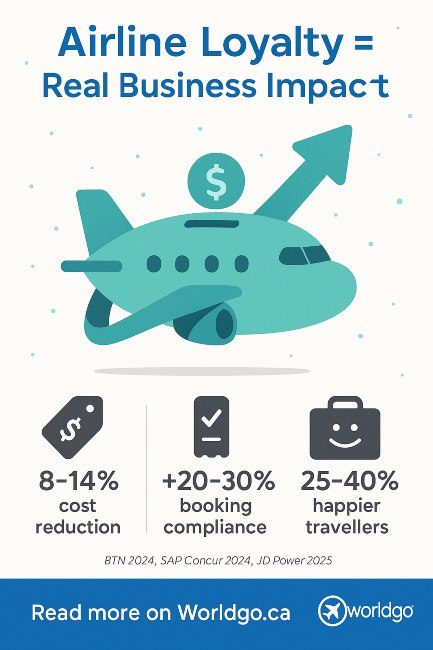
We’ve analysed hundreds of corporate travel programs and discovered a consistent pattern: companies treating airline loyalty as an employee perk rather than a financial instrument are leaving 8-14% of potential travel ROI unrealised.

Let’s fix that by dissecting the five loyalty programs that matter most for Canadian and cross-border business travellers in 2025 and beyond:

Airline Loyalty is Business Strategy, Not Bonus Miles

Airline Loyalty is Business Strategy, Not Bonus Miles

Before diving into program specifics, understand this fundamental principle:

The value of airline loyalty programs isn’t in the points themselves—it’s in the structured behaviours they create, the leverage they provide, and the traveller experience they deliver.

Smart organisations are transforming miles and points into:

  • Policy compliance drivers that align traveller incentives with corporate objectives
  • Cost reduction mechanisms through strategic redemptions and status benefits
  • Traveller satisfaction engines that improve productivity and retention
  • Negotiation leverage for corporate contracts and preferred rates

When we evaluate the programs below, we’re looking beyond basic earn-and-burn rates to these deeper business impacts.

The Five Major Programs Shaping Corporate Travel in 2025

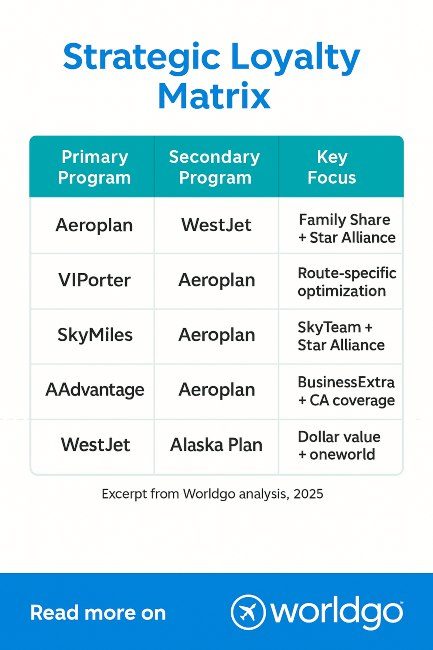
1. Aeroplan: The Canadian Corporate Cornerstone

Program Signature: Multi-carrier flexibility with business-focused redemption options

Air Canada’s Aeroplan has evolved from a traditional airline program into what can only be described as a comprehensive travel currency system. For Canadian businesses with both domestic and international travel needs, it provides unmatched network coverage through Star Alliance while delivering sophisticated tools specifically designed for corporate management.

Airlines Included:

  • Air Canada (primary airline)
  • Star Alliance network (40+ airlines including United Airlines, Lufthansa, SWISS, Austrian Airlines, Brussels Airlines, ANA, Singapore Airlines, Thai Airways, and many more)
  • Additional non-alliance partners include Air Serbia, Azul, Etihad Airways, Gulf Air, and Vistara

Key Business Benefits:

  • Family Sharing: Pool points across up to 8 accounts (adaptable for small business teams)
  • Points + Cash: Flexible redemption options ideal for budget-conscious travel departments
  • Priority Reward Vouchers: 50% off award tickets on select routes (major value for last-minute business travel)
  • Everyday Status Qualification: Non-flight earning pathways keep status active during travel freezes

Corporate Integration Features:

  • Aeroplan Business account consolidation
  • Centralised point management
  • Company-level reporting dashboards
  • Travel policy integration options

Status Tiers That Matter:

  • Aeroplan 25K: Priority check-in, 2 checked bags, 20 eUpgrade credits
  • Aeroplan 35K: Priority security, Star Alliance Silver status
  • Aeroplan 50K: Maple Leaf Lounge access, Star Alliance Gold status
  • Aeroplan 75K: Priority reward vouchers, higher upgrade priority
  • Super Elite 100K: Concierge service, highest upgrade priority, exclusive partner benefits

Business Intelligence Advantage: Aeroplan’s segment-specific targeting means companies can negotiate customised benefits based on their exact route patterns, not just overall spend—a significant advantage for organisations with concentrated travel on specific city pairs.

2. WestJet Rewards: The Flexible Value Program

Program Signature: Straightforward dollar-value returns with minimal redemption friction

WestJet Rewards operates on a fundamentally different model than traditional airline programs, making it uniquely valuable for certain business travel patterns. Rather than arbitrary “miles” or “points,” WestJet’s program accumulates WestJet dollars with transparent, consistent value.

Airlines Included:

  • WestJet (primary airline)
  • Delta Air Lines (transborder partnership)
  • Air France-KLM (transatlantic partnership)
  • Qantas (select routes to Australia)

Key Business Benefits:

  • Immediate Value: WestJet dollars represent actual currency, simplifying expense reporting
  • No Blackout Dates: Critical for dynamic business travel schedules
  • Companion Vouchers: Valuable for executive travel and business development
  • Member Exclusive Fares: Reduced rates for program members (stackable with corporate rates)

Corporate Integration Features:

  • Business portal access
  • Simplified reconciliation with dollar-based rewards
  • RBC WestJet Business Mastercard integration
  • Quarterly spending reports

Status Tiers That Matter:

  • Teal: Base earning rate
  • Silver: 3% WestJet dollar earn, 4 airport lounge vouchers
  • Gold: 5% WestJet dollar earn, 8 airport lounge vouchers, advance seat selection
  • Platinum: 8% WestJet dollar earn, unlimited airport lounge access, priority security

Business Intelligence Advantage: WestJet’s transparent dollar-value system integrates seamlessly with expense management platforms, creating clear visibility into rewards as a tangible reduction against travel spend, ideal for finance-focused organisations.

3. VIPorter: The Premium Niche Program

Program Signature: High-value concentrated benefits for specific business corridors

Don’t underestimate Porter Airlines’ loyalty program simply because of the carrier’s focused route network. For businesses with heavy travel along key Eastern corridors like Toronto-Montreal, Toronto-Ottawa, and growing US destinations, VIPorter delivers outsized value.

Airlines Included:

  • Porter Airlines (exclusive to this program)
  • JetBlue (limited partnership for select US routes)

Key Business Benefits:

  • Rapid Qualification: Status thresholds designed for realistic business travel volumes
  • Priority Services: Dedicated check-in and boarding streams that save valuable time
  • Flight Credit System: Straightforward redemption model (15 flight segments = 1 free flight)
  • Premium Experience Focus: Consistent service delivery with fewer variables

Corporate Integration Features:

  • Corporate portal for travel managers
  • Business booking system integration
  • Team-based status acceleration
  • Quarterly activity reports

Status Tiers That Matter:

  • VIPorter: Basic membership
  • VIPorter Passport: Priority check-in, dedicated phone line, free seat selection
  • VIPorter Priority: Priority boarding, free flight changes, priority security

Business Intelligence Advantage: VIPorter’s focused route network creates opportunities for status concentration—achieving higher elite recognition on key business routes without needing to spread travel across an entire global network.

4. Delta SkyMiles: The Experience-Driven Program

Program Signature: Premium journey management with deep corporate recognition

Delta SkyMiles stands out for businesses that prioritize consistency and traveller experience across North American and global routes. While the program has shifted to a revenue-based model, its true value lies in its comprehensive elite experience and corporate recognition systems.

Airlines Included:

  • Delta Air Lines (primary airline)
  • SkyTeam alliance (19 airlines including Air France, KLM, Korean Air, Virgin Atlantic, Aeromexico, China Airlines, and more)
  • Non-alliance partners, including WestJet, LATAM, and Virgin Australia

Key Business Benefits:

  • SkyBonus: A Parallel corporate rewards program that runs alongside individual accounts
  • Corporate Priority: Enhanced upgrade odds for aligned business travellers
  • Choice Benefits: Customizable elite rewards, including upgrade certificates and Sky Club access
  • MQD Waiver: Meaningful status acceleration through credit card spending

Corporate Integration Features:

  • Delta Business Travel Portal
  • SkyBonus points management system
  • Corporate reporting dashboards
  • Travel policy integration

Status Tiers That Matter:

  • Silver Medallion: Priority boarding, free checked bag, preferred seats
  • Gold Medallion: Priority security, standby priority, waived same-day changes
  • Platinum Medallion: Choice Benefits, enhanced upgrade clearance
  • Diamond Medallion: Premium Choice Benefits, highest upgrade priority, dedicated VIP services

Business Intelligence Advantage: Delta’s dual-recognition system (SkyMiles + SkyBonus) creates a multiplier effect where companies can earn corporate rewards while travellers simultaneously accrue personal status benefits—a win-win that drives policy compliance.

5. American Airlines AAdvantage: The Alliance Powerhouse

Program Signature: Global coverage with streamlined elite recognition

The AAdvantage program has evolved significantly in 2025, emerging as a strategic cornerstone for businesses needing comprehensive Oneworld alliance coverage. Its Loyalty Point system has created innovative pathways to status that align perfectly with modern corporate travel patterns.

Airlines Included:

  • American Airlines (primary airline)
  • Oneworld alliance (14 airlines including British Airways, Cathay Pacific, Finnair, Japan Airlines, Qantas, Qatar Airways, and more)
  • Additional partners, including JetBlue, Hawaiian Airlines, and GOL

Key Business Benefits:

  • Loyalty Points System: Multiple earning pathways beyond just flying
  • Admirals Club Access: Productive workspace network across key business hubs
  • Business Extra: Parallel corporate earnings program
  • Partner Elite Recognition: Strong status benefits across the Oneworld alliance

Corporate Integration Features:

  • Business Extra account management
  • Corporate booking tool integration
  • Simplified expense reconciliation
  • Quarterly performance reports

Status Tiers That Matter:

  • AAdvantage Gold: Priority boarding, preferred seats, Oneworld Ruby status
  • AAdvantage Platinum: Priority security, free same-day standby, Oneworld Sapphire status
  • AAdvantage Platinum Pro: Free same-day flight changes, Oneworld Sapphire status
  • AAdvantage Executive Platinum: Systemwide upgrades, Oneworld Emerald status

Business Intelligence Advantage: AAdvantage’s Loyalty Points system creates opportunities for status acceleration through strategic credit card usage and partner activities—ideal for maintaining elite benefits during travel reductions.

The Strategic Loyalty Matrix: Finding Your Program Fit

The Strategic Loyalty Matrix: Finding Your Program Fit

Not all corporate travel programs are alike, and selecting the right loyalty program depends on your specific business travel patterns:

If Your Business Travel Is… Primary Program Secondary Program Key Integration Focus
Canadian Domestic & International Aeroplan WestJet Rewards Family Sharing + Star Alliance
Eastern Canada City Pairs VIPorter Aeroplan Route-specific optimisation
Canada-US Cross-Border Delta SkyMiles Aeroplan SkyTeam + Star Alliance coverage
US & Global with Oneworld Partners AAdvantage Aeroplan Business Extra + Aeroplan for Canada
Western Canada & US West Coast WestJet Rewards Alaska Mileage Plan Dollar value + Oneworld benefits

Five Critical Implementation Steps

Transforming loyalty from passive collection to a strategic asset requires systematic implementation:

  1. Conduct a Loyalty Audit
    • Map current program enrollments across your organisation
    • Identify fragmentation and missed opportunities
    • Quantify the loyalty gap between the current and optimal state
  2. Develop a Program Architecture
    • Select primary and secondary programs based on travel patterns
    • Create role-based status strategies
    • Build points pooling and sharing structures
  3. Implement Technical Integration
    • Connect loyalty accounts to booking tools
    • Deploy tracking and reporting systems
    • Establish redemption management processes
  4. Create Policy Alignment
    • Develop loyalty-optimised routing guidelines
    • Structure approval workflows around program benefits
    • Build incentives for compliant booking behaviour
  5. Measure and Optimise
    • Track redemption value realisation
    • Monitor the status of qualification progress
    • Adjust strategy based on program changes

The Airline Loyalty Opportunity: Real Business Impact

When properly implemented, a strategic approach to airline loyalty delivers concrete business advantages:

Business Challenge Loyalty Solution Measurable Impact
Rising travel costs Strategic point redemptions 8-14% effective cost reduction
Policy compliance struggles Status-aligned incentives 20-30% improvement in booking behaviour
Traveler dissatisfaction Elite recognition benefits 25-40% increase in program approval
Limited supplier leverage Consolidated program volume 5-15% improvement in negotiated rates

Beyond Points: The Future of Corporate Airline Loyalty

The most sophisticated organisations are now taking airline loyalty to the next level:

  • Integrated Recognition Systems: Combining hotel, airline, and ground transportation status for seamless travel experiences
  • Predictive Loyalty Analytics: Using AI to forecast optimal booking patterns for maximum status benefits
  • Experiential Redemptions: Deploying points for high-value business development activities beyond just flights
  • Sustainability Integration: Aligning carbon offset programs with loyalty initiatives

Your Action Plan: Three Steps to Start Today

Ready to transform your approach to airline loyalty programs? Here’s how to begin:

  1. Map Your Current State
    • Which programs are your travellers currently using?
    • What status levels exist across your organisation?
    • Where are points currently being accumulated and redeemed?
  2. Analyse Your Route Patterns
    • Which carriers dominate your top 10 city pairs?
    • What alliances cover your global travel needs?
    • Where do you have concentration opportunities?
  3. Partner with Expertise
    • Contact Worldgo for a comprehensive loyalty audit
    • Develop a tailored strategy for your specific travel patterns
    • Implement systems to track, manage, and optimise program benefits

Airlines Loyalty Programs as a Strategic Asset, Not Side Benefit

In 2025, the difference between leading travel programs and lagging ones isn’t just in negotiated rates or policy compliance—it’s in how strategically they leverage loyalty as a business tool.

The organisations seeing the greatest ROI are those treating loyalty programs not as passive perks but as active financial instruments that deliver measurable returns when properly managed.

Ready to transform your approach? Let us show you how.

Frequently Asked Questions About Airline Loyalty Programs for Business Travel:

How do we prevent loyalty program fragmentation across our organisation?

Implement a structured program selection process based on route analysis, create clear policy guidelines around preferred programs, and deploy centralised tracking tools to monitor loyalty accumulation.

Can corporate bookings still earn personal loyalty points?

Yes! The optimal strategy combines individual point accumulation (maintaining traveller incentives) with corporate program benefits (delivering organisational value). Worldgo helps structure these dual-benefit systems.

Which credit cards should our company use to maximise airline loyalty?

This depends entirely on your primary loyalty program architecture. We can recommend specific business card strategies based on your selected programs and travel patterns.

What happens to loyalty benefits if we change our primary airline partner?

Status matching and challenge opportunities exist between most major programs. We help design transition strategies that preserve earned benefits while shifting to new loyalty partners.

How can small businesses compete with large corporations for airline loyalty benefits?

Concentration strategies, focused status targeting, and strategic credit card integration can help smaller organisations achieve elite benefits despite lower overall travel volume.

The Best Hotel Loyalty Programs for Corporate Travellers (And How to Actually Get ROI From Them)

Updated.  April 22, 2025

When looking at the best hotel loyalty programs for business, most companies think of programs like frequent flyer miles: passive rewards for inevitable spend.

That’s a mistake.

Today, hotel loyalty isn’t a thank-you, it’s a lever. It’s a behavioural influence tool. A cost-control tactic. A performance booster. But only if your company knows how to use it.

The secret? The best hotel loyalty programs are generous, predictable, programmable, and strategic. This article isn’t just about who offers the most points. It’s about how to turn loyalty into a measurable, scalable asset with the right systems in place, especially when paired with a strategic partner like Worldgo.

Hotel Loyalty Programs for Corporate Travelers

Loyalty is Behavioural Economics in Disguise

You don’t need to be Daniel Kahneman to know this:

People will spend more, stay longer, and tolerate inconvenience… if they believe they’re “getting closer” to a free night.

This is the genius of well-designed hotel loyalty programs: they don’t just reward behaviour—they shape it.

For corporate travel planners, that’s power—the ability to influence traveller preferences and purchasing behaviour without enforcing hard limits. Want employees to book more cost-effective brands within your policy? Offer bonus perks for programs with lower nightly averages. Want fewer out-of-policy bookings? Pick programs with desirable tiers and personalized experiences.

With loyalty, compliance becomes intrinsic. Your travellers play the game—you set the rules.

Loyalty Arbitrage is a Financial Hack

Imagine you could take 50 hotel nights—already paid for—and extract:

  • 3 free nights for executive offsites
  • 4 room upgrades for key clients
  • 10% improvement in employee travel satisfaction
  • Early check-ins and lounge access that reduce expense claims

That’s loyalty arbitrage: the act of turning soft benefits into hard business value.

Here’s why it’s so underused:

  • Decentralized bookings scatter points across departments
  • Travellers book personally, losing corporate access
  • No central tracking, so points go unused
  • No policy alignment, meaning benefits don’t scale

At Worldgo, we call it loyalty leakage. And in companies with frequent travel, it can mean thousands of dollars in lost value per year.

Hotel Loyalty Programs Boost Your Business Travel ROI

Hotel loyalty programs are a strategic advantage. Here’s what your company stands to gain:

Benefit Value
Free Nights Reduces T&E costs by 8–15% annually1 
Status Perks Streamlines check-in/out, saving up to 3 hours/month per traveller
Expense Alignment Easier reconciliation with central billing & reporting
Employee Retention Travel perks increase morale and loyalty among frequent flyers

1 (Source: BTN 2024)

So… Which Hotel Loyalty Program Is “Best”?

Wrong question.
The real question is: Which one aligns with your company’s travel footprint and growth priorities?

Let’s break that down with a matrix no one else is showing you:

Which Hotel Loyalty Program Is Best for Your Business? 

Program Best For Hidden Superpower Strategic Risk
Marriott Bonvoy Global enterprise teams, C-suite, event planners Massive global footprint (8,500+ hotels), Bonvoy Events for meetings Complex tiering and inconsistent elite recognition across some brands
Hilton Honors Mid-market travel teams, frequent flyers Fast-track elite perks via Milestone Bonuses and generous mid-tier benefits Points value dilution at higher redemption levels
World of Hyatt Luxury-focused travelers, APAC-heavy travel programs High-value Globalist tier, lowest point redemption for luxury Smaller global footprint, particularly outside North America and Asia
ALL – Accor Live Limitless EMEA/APAC markets, lifestyle spenders, companies with diverse employee profiles Spend-based rewards across hotel, dining, wellness, and experiences Weaker U.S. presence and less competitive mid-tier perks

Here’s a visual chart: a radar graph comparing the four loyalty programs—Marriott Bonvoy, Hilton Honors, World of Hyatt, and ALL – Accor Live Limitless—across five strategic categories:

  • Global Footprint
  • Elite Perks
  • Business Tools
  • Redemption Value
  • Lifestyle Integration

A radar graph comparing the four loyalty programs—Marriott Bonvoy, Hilton Honors, World of Hyatt, and ALL – Accor Live Limitless

1. Marriott Bonvoy is the Corporate Powerhouse

What Makes It Unique:
Marriott Bonvoy isn’t just a loyalty program—it’s a travel ecosystem. With 30+ brands and over 8,500 properties globally, Bonvoy gives companies massive flexibility across price points and regions.

  • 5 elite tiers: Silver → Titanium → Ambassador Elite
  • Points earned on stays, dining, events, and co-branded Amex purchases
  • Bonvoy Business Events program for meeting planners
  • “Suite Night Awards” unlock serious value for exec-level travellers


Marriott has expanded business intelligence dashboards for companies using its Business Ready corporate booking platform, offering real-time analytics on travel spend and point accumulation across teams.

Best For:
Mid to large companies with multi-region teams and executive travelers needing luxury options.

2. Hilton Honors is the Loyalty Optimizer

Hilton’s approach to loyalty is modular, scalable, and ideal for repeat business travel

What Makes It Unique:
Hilton’s approach to loyalty is modular, scalable, and ideal for repeat business travel. With more than 7,200 properties in 120+ countries, Hilton Honors is the best “workhorse” loyalty program on the planet.

  • Diamond Tier: Complimentary upgrades, lounge access, and bonus point multipliers
  • Rollover nights: Don’t lose status from a quiet quarter
  • Fast track to elite status via business credit card or group bookings
  • Points pooling across employees (perfect for centralizing team value)


Hilton has integrated AI-driven personalization into its app, meaning elite members see dynamically priced upgrades and early-check-in alerts based on booking history.

Best For:
Companies with frequent domestic or regional travel, cost-conscious programs, or remote teams that value flexible perks.

3. World of Hyatt has its Quiet Luxury Play

What Makes It Unique:
World of Hyatt offers a smaller scale but exceptional quality, especially in wellness-forward and boutique environments. For companies with fewer, but more high-value travellers, Hyatt delivers meaningful returns.

  • Globalist status: Waived resort fees, confirmed suite upgrades, club lounge access
  • Access to Miraval Resorts, Alila, and other high-end brands
  • Flexible redemption: Free nights start at just 5,000 points

Best For:
C-level executives, high-touch hospitality needs, or smaller companies wanting a high-luxury option.

Pro Tip: Use Hyatt’s corporate negotiator tool to combine your company’s volume with individual elite statuses for stacked benefits.

4. ALL – Accor Live Limitless is Turning Into a Global Dark Horse

What Makes It Unique:
Often overlooked in North America, Accor’s ALL program is a must-watch for global companies operating in Europe, Asia, or Latin America. With over 5,300 hotels across 110 countries, it offers luxury-forward value without U.S.-style pricing.

  • Status tiers: Classic → Silver → Gold → Platinum → Diamond
  • ALL Visa cards with point multipliers and automatic status bump
  • Event & meeting bookings earn triple rewards in 2025
  • Redeem points on lifestyle experiences (concerts, dining, wellness)


Accor’s ALL Connect feature allows business travellers to book co-working passes, meeting spaces, and local experiences with loyalty points—a massive differentiator.

Best For:
Multinational firms with Europe/APAC travel needs, or companies looking to incentivize employees beyond just room nights


The Strategic Loyalty Framework (Not Just Perks)

To make these membership programs work for your business, you need to move from points tracking to loyalty management.

Here’s how high-performing travel managers are structuring their approach:

Loyalty Strategy Element Why It Matters
Standardized membership enrollment Every traveller earns, no lost points
Visibility on point accruals Justify program participation with hard ROI
Matching elite status to role Sales directors fly more = more perks needed
Preferred hotel policy by loyalty tier Employees prioritize programs withthe  highest return
Program education Employees know how to use upgrades, redemptions, and perks

How Worldgo Turns Loyalty Into Leverage

When clients come to us, they’re often saying:

“We have Gold status… we think. But we don’t know who’s using it or how.”

We solve that.

  • Create a loyalty policy aligned with your travel 
  • Map team travel to optimal loyalty programs
  • Centralize bookings for points accumulation
  • Track and optimize redemption ROI
  • Manage tier access and reporting in one place

And most importantly, we make loyalty worth caring about for your people.

Because when your travellers feel valued, they’ll travel better, stay longer, and stay loyal to your company too.

Business trips

Loyalty Is a Travel Currency. Make It Count.

Loyalty doesn’t work unless it works for everyone. We make that happen.

The best hotel loyalty programs in 2025 aren’t just offering points—they’re offering leverage. If you’re not turning that into a competitive advantage, your competitors might be.

Hotel loyalty becomes a revenue strategy with the right playbook (and the right travel partner).

Let Worldgo help you write it. 

Common Questions People Ask About Hotel Loyalty Programs for Corporate Travel: 

Can my company earn loyalty points?

Yes, it can. Some programs (like Marriott Events or Hyatt for Business) offer dual earnings for the traveller and the organization.

How do I control employee point hoarding?

Use a travel partner like Worldgo to centralize accounts, align travel policy, and build structured benefit tiers.

What’s the real ROI of hotel loyalty programs?

Proper loyalty management can save $15k–$30k per year for mid-sized travel programs. This comes from redeemed nights, avoided fees, upgrades, and staff retention.

Is it better to consolidate all stays with one brand?

If your company’s travel patterns support it, absolutely. However, we often recommend 1–2 programs for balance, with clear guidelines for when to use each.

Can I earn loyalty points if I book through a travel agency?

Yes—if the agency is loyalty-aligned and books direct via approved channels. Worldgo ensures all eligible bookings earn full benefits.

Should I get a hotel-branded business credit card?

Yes, if it complements your chosen loyalty ecosystem. Marriott and Hilton cards, in particular, offer a major upfront value for frequent travel teams.

Do loyalty perks make a difference in employee satisfaction?

Yes, it does. 100%. Access to lounges, upgrades, and recognition creates a more human, comfortable travel experience, which means higher retention and better performance.

Exploring Bleisure Travel Opportunities in Toronto 2025

Toronto, a dynamic metropolis blending vibrant culture with a thriving business hub, is quickly becoming a top destination for bleisure travel. Combining business and leisure, bleisure travel in Toronto allows professionals to extend work trips into enriching personal experiences. From iconic landmarks like the CN Tower to diverse culinary scenes and entertainment districts, the city provides endless opportunities for exploration. 

For companies prioritizing seamless corporate travel management in Toronto, agencies like Worldgo ensure stress-free arrangements, allowing business travellers to focus on their professional and leisure goals. Dive into how you can maximize your next work trip to Toronto with the perfect blend of productivity and play!

What is Bleisure Travel and Why is Toronto the Perfect Destination?

Bleisure travel, a rising trend in corporate travel, combines business with leisure, allowing professionals to turn work trips into fulfilling personal experiences. It’s the perfect opportunity to make the most of business travel by exploring new destinations, unwinding after meetings, and embracing the local culture. Toronto, with its vibrant mix of business opportunities and leisure attractions, is an ideal destination for bleisure travellers. As Canada’s largest city and economic hub, it offers world-class conference facilities, innovative industries, and a thriving corporate environment. 

Beyond the boardroom, Toronto boasts a rich tapestry of cultural landmarks, iconic attractions like the CN Tower, scenic waterfront views, and diverse dining options. This unique combination makes Toronto not only a productive place for work but also a captivating playground for leisure activities, perfectly suited to the bleisure travel lifestyle.


Top Attractions for Bleisure Travelers in Toronto

Toronto’s diverse offerings make it an exceptional destination for every type of bleisure traveller, ensuring a memorable experience regardless of personal interests. Here’s a list of top picks for travellers looking to balance work and leisure: 

For the Culture Enthusiasts

  • Royal Ontario Museum (ROM): A treasure trove of art, culture, and natural history, perfect for an inspiring afternoon.
  • Art Gallery of Ontario (AGO): Home to a vast collection of Canadian and international artwork.
  • Distillery District: This historic area offers cobblestone streets lined with galleries, boutiques, and restaurants.

For the Outdoor Adventurers

  • Toronto Islands: A short ferry ride away, these islands offer bike rentals, kayaking, and stunning views of the city skyline.
  • High Park: Perfect for hiking, picnicking, or enjoying nature’s tranquillity within the city.
  • Scarborough Bluffs: Ideal for scenic hikes and breathtaking waterfront views.

For Architecture and History Buffs

  • Casa Loma: A Gothic Revival castle with stunning gardens and panoramic city views.
  • Hockey Hall of Fame: A must-visit for sports lovers, celebrating Canada’s favourite pastime.
  • Old Town Toronto: Discover the city’s historical roots through charming streets and heritage buildings.

For Entertainment Seekers

  • CN Tower: A classic attraction with a thrilling glass floor and fine dining at 360 Restaurant.
  • Toronto Theatre District: Catch a world-class performance or musical at one of the many theatres.
  • Ripley’s Aquarium of Canada: A fun and interactive way to explore marine life, right next to the CN Tower.

For Relaxation and Wellness

  • Spa Days: Luxury spas like Miraj Hammam or Elmwood Spa provide the perfect escape after a busy day.
  • Harbourfront Centre: Enjoy serene waterfront views, art installations, and seasonal events.
  • Beaches Neighborhood: Relax by the water, stroll along the boardwalk, or take a dip at Woodbine Beach.

Culinary Delights for Foodie Bleisure Travelers in Toronto

Eating out Toronto’s culinary scene is a melting pot of global flavours, offering something for every palate. From upscale dining to casual eats, here are some must-visit spots for food-loving bleisure travellers:

1. St. Lawrence Market: A haven for gourmet treats and local flavours, this market has been named one of the world’s best. Indulge in iconic peameal bacon sandwiches at Carousel Bakery or sample fresh seafood and artisanal cheeses.

2. Toronto’s Diverse Neighborhoods:

    • Chinatown: Savor authentic dim sum at Rol San or indulge in mouthwatering Peking duck at Lai Wah Heen.
    • Little Italy: Enjoy handcrafted pasta and wood-fired pizzas at Terroni or a classic Italian meal at Trattoria Nervosa.
    • Greektown: Dive into Mediterranean flavours with souvlaki and baklava at Mezes.

3. Kensington Market: A vibrant hotspot for foodies, offering street food and eclectic global eats. Don’t miss the tacos at Seven Lives, the empanadas at Jumbo Empanadas, or the indulgent ice cream sandwiches at Bang Bang Ice Cream and Bakery.

4.Fine Dining Options:

    • Canoe: Located on the 54th floor of the TD Tower, this restaurant offers stunning views of the city alongside contemporary Canadian cuisine.
    • Alo: Consistently ranked among the top restaurants in Toronto, Alo is a must-visit for French-inspired tasting menus in an elegant setting.
    • Scaramouche: Known for its refined menu and breathtaking skyline views, Scaramouche is a favourite for special occasions.

5. Casual Favorites:

    • Patois: A creative fusion of Caribbean and Asian flavours, offering dishes like jerk chicken chow mein.
    • Bar Isabel: A cozy spot with Spanish-inspired tapas and an impressive wine list.
    • Wilbur Mexicana: Perfect for quick yet delicious Mexican street food, including some of the best tacos in town.

The Role of Corporate Travel Management in Enhancing Bleisure Experiences 

Corporate travel management with Worldgo will play a crucial role in ensuring seamless and enjoyable future bleisure travel experiences. By combining expertise in business travel logistics with an understanding of leisure travel needs, corporate travel management bridges the gap between work and personal exploration. Here’s how Worldgo helps elevate bleisure travel:

1. Streamlined Travel Planning

Worldgo takes the stress out of managing complex itineraries by organizing flights, accommodations, and transportation in a way that supports both business meetings and leisure activities. Flexible scheduling options ensure clients can extend their stays or enjoy downtime between commitments.

2. Tailored Recommendations

Through their in-depth knowledge of destinations like Toronto, Worldgo offers personalized suggestions for activities, dining, and sightseeing that cater to individual preferences. Whether it’s a fine dining restaurant after a conference or tickets to a theatre performance, they help clients make the most of their leisure time.

3. Optimized Budgets and Cost Savings

Worldgo leverages industry partnerships and advanced travel technologies to secure the best deals on travel and accommodations. By combining business and leisure arrangements, they optimize expenses without compromising on quality, ensuring clients can indulge in leisure activities within corporate travel policies.

4. VIP-Level Convenience and Support

With dedicated travel advisors, Worldgo provides around-the-clock support, handling last-minute changes or unexpected issues. Their expertise ensures clients can transition smoothly from business tasks to leisure pursuits without disruption.

5. Seamless Work-Life Balance

Worldgo understands the importance of maintaining productivity while enjoying downtime. They assist in selecting accommodations with work-friendly amenities, such as meeting spaces and high-speed internet, while also recommending nearby attractions for relaxation and entertainment.

6. Focus on Well-Being

From recommending wellness-focused accommodations to arranging spa bookings or fitness activities, Worldgo emphasizes traveller health and well-being, ensuring clients return refreshed and recharged.

How Toronto’s Accessibility Makes Bleisure Travel Seamless

Efficient Public Transit System

The Toronto Transit Commission (TTC) operates a comprehensive network of subways, buses, and streetcars, making it the largest public transit system in Canada. Serving approximately 1.7 million daily commuters, the TTC ensures that travellers can navigate the city with ease, reaching both business venues and leisure destinations efficiently.

Proximity to Major Airports

Toronto Pearson International Airport (YYZ), Canada’s busiest airport, is located just 27 kilometres northwest of downtown Toronto, offering bleisure travellers seamless transitions between international flights and city engagements. The Union Pearson Express (UP Express) further enhances accessibility with a direct rail link to Union Station in the heart of downtown. Operating nearly 1,250 flights daily, the airport provides flexible scheduling options, making it easy for travellers to plan both business and leisure activities efficiently.

Luxury Stays for Bleisure Travelers: Where Business Meets Comfort

Finding the perfect place to stay is key to balancing business and leisure travel, and Worldgo excels in connecting bleisure travellers with premium accommodations. With access to top-rated hotels tailored to business needs, Worldgo ensures a seamless blend of productivity and relaxation for corporate travellers. Beyond business trips, Worldgo’s Vacation Club offers a world of exclusive perks for personal travel. Members enjoy special discounts on flights, packages, cruises, tours, hotels, car rentals, and more, all backed by the expertise and unbiased recommendations of experienced, well-traveled Vacation Specialists. 

However, this VIP service is reserved exclusively for employees of Worldgo’s corporate clients, providing unmatched service, great deals, and access to luxury stays at economical prices. For bleisure travellers, joining the Worldgo Vacation Club ensures not only a superior travel experience but also incredible savings on both business and leisure accommodations worldwide.

Make the Most of Your Bleisure Travel Experience in Toronto

Exploring Bleisure Travel Opportunities in Toronto opens up a world of possibilities for business travellers looking to combine work with leisure. With its vibrant culture, world-class attractions, and seamless accessibility, Toronto is the ultimate destination for bleisure travel. Whether you’re unwinding after meetings, exploring the city’s culinary delights, or enjoying luxury accommodations, Toronto offers something for every traveller. Start planning your bleisure travel Toronto experience with Worldgo and discover how to make the most of your next business trip.

Commonly Asked Questions about Bleisure Travel in Toronto

What are the best neighbourhoods in Toronto for bleisure travellers to stay in?

Downtown Toronto is ideal for bleisure travelers, offering proximity to major business hubs and attractions. Areas like Yorkville, the Entertainment District, and the Waterfront combine convenience with vibrant dining and cultural experiences.

How accessible is Toronto for international business travellers?

Toronto Pearson International Airport (YYZ) offers nearly 1,250 flights daily, connecting the city to destinations worldwide. The Union Pearson Express provides a direct and fast link from the airport to downtown, ensuring seamless accessibility.

Can corporate travel expenses include leisure activities?

This depends on the company’s travel policy. Many companies allow bleisure travellers to cover additional leisure expenses personally while the company manages business-related costs.

Are there any exclusive perks for Worldgo clients visiting Toronto?

Yes! Employees of Worldgo’s corporate clients can join the exclusive Vacation Club, which provides special hotel rates, discounts on personal travel, and VIP-level service to enhance their bleisure experience in Toronto and beyond.

What are some must-see attractions for bleisure travellers in Toronto?

Bleisure travellers should visit iconic spots like the CN Tower, Royal Ontario Museum, Toronto Islands, and Kensington Market. These attractions offer a mix of culture, history, and relaxation opportunities.

What’s the best way to get around Toronto during a bleisure trip?

Toronto’s public transit system, the TTC, offers reliable subway, bus, and streetcar services. For added convenience, ride-sharing apps, taxis, and rental cars are also readily available.

Maximizing Efficiency with SAP Concur®: Tips and Tricks

SAP Concur® is a game-changer for streamlining corporate travel and expense management, and at Worldgo, we know how to unlock its full potential. As a leading travel management company, Worldgo combines traditional expertise with innovative tools like SAP Concur® to deliver seamless travel experiences. So, let’s explore some practical tips and tricks to help you maximize efficiency, reduce errors, and simplify your workflows. Whether you’re a seasoned user or just getting started, these insights will ensure you’re leveraging one of the best travel technologies in the industry.

Introducing Sap Concur®: Understanding the Basics

SAP Concur Booking Platform

SAP Concur® is a comprehensive travel and expense management platform designed to simplify and streamline corporate travel complexities. Key features include automated travel booking, integrated expense reporting, and policy compliance enforcement, all accessible through a user-friendly interface. With tools like real-time expense tracking, receipt imaging, and robust analytics, SAP Concur® enables businesses to see their travel spending fully while reducing manual tasks and errors. 

Additionally, its seamless integration with third-party applications and mobile accessibility ensures users can manage travel plans and expenses on the go. By centralizing processes, SAP Concur® empowers organizations to save time, enhance productivity, and maintain financial control, making it a vital tool for efficient travel management.

Streamline Your Travel Bookings with SAP Concur®

SAP Concur® simplifies the travel booking process by integrating all your travel needs into one intuitive platform. From flights and hotels to car rentals, it allows users to compare options, ensure policy compliance, and book easily—all in real-time. Its seamless interface eliminates the hassle of juggling multiple websites or approvals, streamlining the experience for both employees and administrators. With mobile accessibility, users can make or adjust bookings on the go, ensuring flexibility and convenience every step of the way.

Expense Reporting Made Easy with SAP Concur®

SAP Concur® takes the headache out of expense reporting by automating the process from start to finish.

SAP Concur® takes the headache out of expense reporting by automating the process from start to finish. With features like receipt imaging, automated data entry, and real-time expense tracking, employees can submit accurate reports in minutes. This reduces errors, ensures policy compliance, and eliminates time-consuming manual tasks. By centralizing expense data, SAP Concur® gives businesses greater visibility into spending patterns, enabling smarter financial decisions and improved budget management. Streamlining expense reporting not only saves time but also fosters a more efficient and transparent workplace.

You Can Customize SAP Concur® to Suit Your Business Needs

Customizing SAP Concur® to suit your business needs ensures the platform aligns seamlessly with your organization’s unique requirements. Whether you’re a small business managing a tight travel budget or a large enterprise overseeing global travel operations, SAP Concur® offers customizable settings to match your policies and workflows. For example, a tech startup with frequent international travel can configure the platform to include multi-currency support and real-time exchange rates, while a nonprofit organization may prioritize expense categories for grants or funding reports. 

With options to tailor approval workflows, expense categories, and integration with your existing systems, SAP Concur® provides the flexibility to meet diverse business goals while maximizing efficiency.

Integrations and Add-Ons: Expanding SAP Concur®’s Capabilities

SAP Concur®’s capabilities can be significantly enhanced through integrations and add-ons, allowing businesses to create a tailored and powerful travel and expense management solution. By connecting with third-party tools such as accounting software, HR systems, and ride-sharing apps, SAP Concur® streamlines workflows and boosts efficiency. For instance, integrating with QuickBooks enables seamless syncing of expense data, while connecting with HR platforms ensures accurate employee profiles and streamlined approvals. 

Add-ons like TripIt Pro provide travellers with real-time itinerary updates and alerts, enhancing the user experience. These integrations not only reduce manual tasks but also provide a more comprehensive view of travel and expense data, empowering businesses to make smarter, data-driven decisions.

Top SAP Concur® Features You Should Be Using

New users of SAP Concur® should leverage these features to unlock the platform’s full potential, save time, enhance accuracy, and improve overall travel and expense management. Take advantage of these top SAP Concur® features and streamline your 2025 travel and expense management:

  • Automated Expense Reporting. Easily capture and track expenses with automated tools that eliminate manual data entry, saving time and reducing errors.
  • Receipt Capture. Use the mobile app to take photos of receipts and automatically match them to expenses, ensuring accuracy and simplicity.
  • Integrated Travel Booking. Book flights, hotels, and car rentals within the platform, ensuring policy compliance and consolidating all travel plans in one place.
  • Policy Compliance Alerts. Get notified when travel or expenses fall outside company policies, allowing adjustments before approval, saving time, and avoiding policy violations.
  • Mobile App Functionality. Manage bookings, approve expenses, and submit reports on the go, providing flexibility and ease for busy professionals.
  • Analytics and Reporting Tools. Access detailed dashboards and reporting tools that provide insights into spending patterns, helping businesses make informed decisions and optimize budgets.
  • Approval Workflows. Streamline expense approvals by setting up custom workflows tailored to your organization’s structure and needs.
  • Multi-Currency Support. Perfect for global businesses, this feature handles currency conversions automatically, simplifying international travel and expenses.

Common Mistakes to Avoid with SAP Concur®: Tips for First-Time Users

For first-time SAP Concur® users, navigating the platform can feel overwhelming, but avoiding a few common mistakes can make the experience smoother and more efficient. By staying aware of these pitfalls and following these tips, first-time users can confidently navigate SAP Concur® and maximize its benefits for travel and expense management.

  • Skipping Initial Setup. Failing to set up your account properly, including preferences, payment methods, and company policies, can lead to errors later. Take the time to configure these settings up front.
  • Neglecting to Learn Key Features. SAP Concur® is packed with tools to save time and improve accuracy, but new users often overlook key features like receipt imaging or policy alerts. Familiarize yourself with the platform’s capabilities to get the most out of it.
  • Ignoring Policy Compliance Notifications. Dismissing notifications about non-compliance with company policies can cause delays in approvals. Always review and adjust bookings or expenses to align with guidelines.
  • Not Utilizing Mobile Functionality. Many users miss out on the convenience of the mobile app. Use it to capture receipts, manage expenses, and approve reports on the go, reducing your workload.
  • Overlooking Integration Opportunities. Not integrating SAP Concur® with your existing tools, like accounting software or HR systems, can result in redundant manual processes. Explore integrations to streamline workflows.
  • Failing to Review Submissions. Double-check expense reports and travel bookings before submission to avoid errors, which could slow down approval and reimbursement timelines.
  • Ignoring Training Resources. SAP Concur® offers tutorials and support tools for new users. Skipping these can lead to missed opportunities for efficiency. Take advantage of available resources to master the platform.

Use These Tips & Tricks to Unlock Your Business’s Potential with SAP Concur®

As you can see, SAP Concur® is a powerful tool that transforms how businesses manage travel and expenses, offering efficiency, transparency, and control. At Worldgo, we utilize and recommend SAP Concur® because of its ability to streamline processes, save time, and provide actionable insights for smarter decision-making. As leaders in travel management, we combine cutting-edge technologies like SAP Concur® with our expertise to deliver seamless, personalized solutions for your business. 

Ready to explore how SAP Concur® and other innovative travel technologies can elevate your operations? Get started today by contacting us to learn more about partnering with Worldgo for all your travel management needs.

Commonly Asked Questions about SAP Concur®

What is SAP Concur®?

SAP Concur® is a travel and expense management platform designed to help businesses streamline travel bookings, automate expense reporting, and enforce compliance with company policies. It provides tools for real-time expense tracking, receipt imaging, and integration with other systems.

What are the main features of SAP Concur®?

Key features include automated expense reporting, integrated travel booking, receipt capture, policy compliance alerts, robust analytics, and mobile app functionality for managing expenses on the go.

Can SAP Concur® integrate with other systems?

Yes, SAP Concur® integrates with various third-party tools like QuickBooks, NetSuite, Salesforce, and HR systems to create a seamless workflow and consolidate data across platforms.

Is SAP Concur® mobile-friendly?

Absolutely. SAP Concur® offers a mobile app that allows users to book travel, capture receipts, track expenses, and submit reports anytime, anywhere.

How can SAP Concur® benefit my business?

SAP Concur® provides increased visibility into spending, streamlines administrative processes, and helps control costs. It also improves employee satisfaction by simplifying travel and expense tasks.

Premium Economy vs Business Class Upgrade: 2025 Corporate Travel Decision Guide

TL;DR: Premium economy costs 1.5-2x economy while business class runs 2-4x economy in 2025. The gap is shrinking on competitive routes, which is great news for your travel budget. For corporate travel managers, premium economy delivers 70% of business class comfort at 40% of the price, making it ideal for budget-conscious long-haul trips. When should you spring for business class? When your employee’s productivity, client impression, or ability to hit the ground running the next day justifies paying 2-3x more. Japan Airlines just won 2024 World’s Best Premium Economy Class, proving this category keeps getting better.


How Much More Does Business Class Cost Compared to Premium Economy?

Business class typically costs 2-4x times more than premium economy in 2025, though the gap is narrowing on competitive routes due to enhanced premium economy offerings.

Want real numbers? A week-long return trip from London to New York on British Airways will cost you over 4x more in business class versus premium economy. But fly Emirates from London to Dubai, and you’re looking at just over 2x the cost. The difference? Route competition and airline strategy.

For corporate travel budgets, these pricing gaps matter—a lot. Global business travel spending is expected to reach $1.48 trillion in 2024, making cost-effective cabin choices crucial for travel managers. Understanding these key benefits of a corporate travel agency becomes crucial when you’re trying to optimize every travel dollar.

Cost Difference: Premium Economy vs. Business Class by Route

Route Type Premium Economy vs Economy Business Class vs Premium Economy
Transatlantic 1.5-2x 2-3x
Trans-Pacific 1.8-2.2x 2.5-4x
Domestic Long-Haul 1.3-1.7x 3-5x

What Are the Key Premium Economy Benefits for Corporate Travel?

Premium economy offers dedicated cabins, 38-42 inches of legroom, priority boarding, enhanced meals, and often limited lounge access—delivering essential business travel comforts at a fraction of business class cost.

Japan Airlines won the 2024 Skytrax World’s Best Premium Economy Class award, highlighting the category’s evolution. Top premium economy products feature 38-42 inch seat pitch, winged headrests for privacy, and modern technology including Bluetooth connectivity. It’s these thoughtful design elements that keep your team productive at 35,000 feet.

Corporate Travel Budget Travel Classes: Premium Economy vs Business Class


Feature Premium Economy Business Class
Seat Space 38-42″ pitch, 35-40% more legroom Lie-flat beds, 60-80″ when flat
Service Level Dedicated cabin crew, priority check-in Personal service, flight butler concept
Productivity Larger tray tables, power outlets Meeting space, reliable Wi-Fi, and privacy
Recovery Factor Better sleep quality vs economy Full rest capability, reduced jet lag
Professional Image Enhanced comfort Premium lounges, dedicated check-in

Here’s a stat that tells the whole story: Premium class traffic contributes about 20% of total passenger revenues while representing only 7% of passenger kilometers. Airlines invest heavily in these cabins because they work for them and for your business travelers.

EVA Air’s Premium Economy Class Kipling amenity kit received “Asia Best Premium Economy Class Amenity Kit” at the 2024 World Travel Catering Expo, demonstrating continued investment in the category.

Which Business Class Perks Justify the Premium for Executives?

When your C-suite is flying, business class isn’t about luxury—it’s about results. We’re talking lie-flat beds for overnight flights, exclusive lounges for client meetings, and the kind of privacy that lets your executives work confidentially at 40,000 feet.

Emirates just swept 7 awards at Skytrax 2024, including Best Premium Economy Class in the Middle East, but their business class remains the gold standard with A380 shower spas and unlimited caviar service. Singapore Airlines keeps winning Best First Class with their door-to-ceiling suites, while business class standards across the board keep climbing.

Business Class Perks for Senior Executives

While premium economy has come a long way, business class remains the leader in luxury with exclusive perks that can’t be beat:

Professional Image: Dedicated check-in, lounge access, priority boarding 

Productivity: Lie-flat beds, meeting space, reliable Wi-Fi 

Health & Recovery: Quality sleep, healthier meals, reduced jet lag 

Client Entertainment: Ability to host clients, enhanced dining options

34% of C-suite leaders credited a third of their company’s sales growth in 2023 to face-to-face meetings. When that kind of revenue is on the line, the business class premium pays for itself. For comprehensive travel management that includes cabin class optimization, check out our corporate travel solutions—they’re designed around your company’s specific needs and goals.

How Do Long-Haul Flight Upgrade Options Compare Across Airlines?

When it comes to airline strategies, Asian carriers are pushing premium economy innovation hard, while Middle Eastern and European airlines are doubling down on business class luxury. 

The 2024 Skytrax winners tell the story—Japan Airlines leads premium economy, followed by Emirates and EVA Air. Each airline has taken a different approach to capturing the sweet spot between economy and business class.

Airline Amenity Comparison: Premium Economy vs Business Class

Airline Premium Economy Features Business Class Features
Japan Airlines 42″ pitch, fixed shell recline, award-winning catering Sky Suite III, lie-flat beds, kaiseki dining
Emirates 40″ pitch, 13.3″ screens, leather seats A380 shower spas, vintage champagne, unlimited caviar
EVA Air Celebrity chef meals, pre-order dining, Kipling amenities Royal Laurel suites, Giorgio Armani amenities
Singapore Airlines Book the Cook, KrisFlyer benefits Door-to-ceiling suites, double beds, premium dining
Qatar Airways Extra legroom, amenity kits Qsuite with sliding doors, 21″ screens, Al Mourjan lounge


When Should Corporate Travel Managers Choose Premium Economy vs Business Class?

Our recommendation? Choose premium economy for trips under 12 hours, mid-level executives, budget-conscious policies, or when the business class premium hits more than 3x economy pricing.

Here’s a reality check: Most millennial business travelers in tech choose budget-friendly options over business class. They’re prioritizing cost-efficiency, and honestly, they’re often right. Premium economy gives them the comfort they need without blowing your annual travel budget.

The data backs this up—among frequent travelers, 23% are on the road once a month or more for client work. For these regular travelers, premium economy upgrades make financial sense on those 6+ hour routes. And when you need the full support system, including 24/7 emergency assistance and risk management, the right travel partner ensures great experiences regardless of which cabin you choose.

Your Decision Framework

Making the right cabin choice starts with a clear decision framework. Let’s walk through yours:

Choose Premium Economy When:


Criteria Threshold Why This Works
Flight Duration 6-12 hours Sweet spot for meaningful comfort without full luxury cost
Employee Level Manager to Director Cost-effective upgrade for your mid-level team
Budget Reality <$5,000 total trip cost Keeps your expense ratios reasonable
Route Competition 3+ airline options Competition keeps premiums lower—use it to your advantage
Travel Purpose Internal meetings, conferences Comfort matters, but luxury isn’t essential

Choose Business Class When:


Criteria Threshold Why This Matters
Flight Duration 12+ hours or overnight Your people need to hit the ground running next day
Employee Level VP+ or client-facing roles Professional image and meeting capability are crucial
Budget High-value travel ROI justifies the premium for key personnel
Travel Purpose High-stakes client meetings Luxury amenities support your business objectives
Health Considerations Medical needs, age 55+ Comfort directly impacts employee wellbeing and performance

Ready to Optimize Your Corporate Travel Strategy?

The right upgrade decision isn’t just about comfort—it’s about aligning spend with strategy. Whether you’re optimizing for cost efficiency, productivity, or executive presence, both premium economy and business class can serve a purpose when applied to the right traveler, route, and trip objective.

With airfare gaps narrowing and expectations rising, your travel policy needs data, context, and a partner that understands how to make it all work for your budget.

Ready to align your cabin class strategy with your business goals? Contact Worldgo today and let’s compare premium economy vs business class for your next trip—with real numbers, not guesswork.


Frequently Asked Questions

What’s the average cost difference between premium economy and business class in 2025?

You’re looking at 2-4x more for business class versus premium economy, but it varies by route. British Airways will charge you over 4x more for business class on London-NYC routes, while Emirates keeps it closer to 2x on London-Dubai. The difference comes down to route competition and airline strategy.

Is premium economy worth it for 8-hour flights?

Absolutely. For any flight 6+ hours, premium economy gives you 35-40% more legroom, better meals, and priority boarding. You’re paying 1.5-2x economy pricing versus business class at 4-5x economy—that’s solid value for your corporate travel budget.

Which airlines have the best premium economy for corporate travel?

Japan Airlines took home 2024’s World’s Best Premium Economy Class award, with Emirates and EVA Air right behind them. These airlines offer dedicated cabins, enhanced catering, and the business-friendly amenities your travelers actually use.

When does business class justify the cost for corporate travel?

When the math works out: C-suite executives on overnight flights, client-facing roles where professional image matters, or when your employee’s next-day productivity directly impacts business outcomes. The key is matching the premium to the business value.

How do I choose between premium economy and business class for my travel policy?

Create clear tiers: premium economy for directors and below on flights 6+ hours, business class for VPs+ on overnight or client-critical travel. Remember, U.S. business travel delivers $14.60 in net operating margin for every $1 invested—factor that ROI into your decisions.

SAP Concur® vs TravelPerk: Which is Better for Your Business?

In a world where business travel is essential yet often chaotic, finding the right tool can mean the difference between streamlined productivity and endless frustration. Two of the industry’s top contenders—SAP Concur® and TravelPerk—promise to simplify expense management and travel booking, but which truly delivers?

Having navigated the ins and outs of SAP Concur® and TravelPerk, we’re here to provide an in-depth, side-by-side comparison to help you make an informed decision.

Understanding the Platforms

SAP Concur® Overview

Established in 1993, SAP Concur® has long been a heavyweight in travel and expense management. After integrating into the SAP ecosystem, it offers a robust, enterprise-level solution that automates and streamlines business travel, expenses, and invoicing.

TravelPerk Overview

Launched in 2015, TravelPerk entered the scene with a mission to simplify business travel. It’s a cloud-based platform that prides itself on user-friendliness and flexibility, catering mainly to small and medium-sized enterprises.

Feature-by-Feature Comparison

Here’s a side-by-side comparison of SAP Concur® and TravelPerk across key features to give you a clear picture.

Expense Management

SAP Concur®

  • Automated Expense Reports: Automatically captures receipts and matches them with expenses.
  • Policy Compliance: Flags non-compliant expenses in real-time.
  • Analytics and Reporting: Offers in-depth analytics for better financial insights.

TravelPerk

  • Basic Expense Tracking: Allows manual input of expenses with receipt uploads.
  • Third-Party Integrations: Supports integrations with tools like Expensify for advanced expense management.
  • Limited Analytics: Basic reporting features focused on travel spend.

Comparison Table: Expense Management


Feature SAP Concur® TravelPerk
Automated Reporting ✅ Yes ⚠️ Limited
Policy Compliance ✅ Yes ⚠️ Limited
Advanced Analytics ✅ Yes ⚠️ Limited
Third-Party Integration Extensive ✅ Yes

Booking Options

SAP Concur®

  • Global Inventory Access: Extensive options for flights, hotels, and car rentals worldwide.
  • Corporate Rates: Supports negotiated corporate rates and discounts.
  • Policy Enforcement: Integrates travel policies into the booking process.

TravelPerk

  • Modern Booking Interface: User-friendly with real-time availability.
  • FlexiPerk Feature: Offers flexible bookings with easy cancellations.
  • Alternative Accommodations: Includes options like Airbnb.

Comparison Table: Booking Options


Feature SAP Concur® TravelPerk
Global Inventory Extensive Extensive
Flexible Booking ⚠️ Standard ✅ FlexiPerk
Alternative Accommodations ⚠️ Limited ✅ Yes
Policy Enforcement ✅ Yes ✅ Yes

Integration Capabilities

SAP Concur®

  • SAP Ecosystem: Seamless integration with SAP products.
  • APIs for Custom Integration: Allows for extensive customization.
  • Third-Party Apps: Integrates with various accounting and HR systems.

TravelPerk

  • Popular Tools Integration: Connects with Slack, Expensify, and Google Calendar.
  • API Access: Limited compared to SAP Concur®.
  • Focus on Simplicity: Prioritizes easy setup over extensive integrations.

User Experience

Having personally used both platforms, here’s my take:

SAP Concur®

  • Learning Curve: This takes time to master due to its comprehensive features.
  • Mobile App: Robust functionality but can feel cluttered.
  • Customization: Highly customizable dashboards and workflows.

TravelPerk

  • Intuitive Design: Clean, modern interface that’s easy to navigate.
  • Quick Onboarding: Employees can start booking with minimal training.
  • Mobile Experience: Streamlined app focused on essential features.

Customer Support

SAP Concur®

  • 24/7 Support: Available via phone and email.
  • Dedicated Account Managers: For enterprise clients.
  • Training Resources: Extensive libraries and webinars.

TravelPerk

  • Business Hours Support: Extended support for premium plans.
  • Live Chat and Email: Responsive but limited after-hours.
  • Help Center: Offers guides and FAQs.

Pricing Structures

Understanding the cost implications is crucial. Here’s how they compare:

SAP Concur®

  • Customized Quotes: Pricing is tailored based on company size and needs.
  • Additional Fees: Possible setup and integration fees.
  • Scalable Plans: Suitable for growing businesses.

TravelPerk

  • Transparent Pricing: Offers a free tier and clear pricing for premium plans.
  • Per-Booking Fees: Charges added on top of travel costs.
  • No Hidden Costs: Easy to predict expenses.

Comparison Table: Pricing


Aspect SAP Concur® TravelPerk
Pricing Model Customized Tiered Plans
Setup Fees ⚠️ Possible ❌ None
Per-Booking Fees ❌ No ✅ Yes
Free Tier ❌ No ✅ Yes

Pros and Cons Table:


SAP Concur® TravelPerk
Pros Pros
Advanced expense automation Simple, fast setup
Customizable policies User-friendly interface
Seamless ERP integrations Affordable pricing tiers
Global scalability Excellent customer support
Cons Cons
Higher learning curve Limited features for large businesses
Costlier for small teams Standardized policy controls

Which Platform Suits Your Business Best?

For Large Enterprises or Those Needing Comprehensive Solutions

If your business requires an all-encompassing platform that can handle complex travel policies and detailed expense reporting and integrates with various enterprise systems, SAP Concur® is the optimal choice. Its robust features are designed to meet the demands of larger organizations.

For Small to Medium Businesses or Those Prioritizing Simplicity

If you’re looking for a straightforward, user-friendly platform that allows for quick bookings and basic expense tracking without the need for deep integrations, TravelPerk might be more suitable.

At Worldgo, we’ve harnessed the power of SAP Concur® to deliver unparalleled travel management services to our clients. Its comprehensive features align perfectly with our commitment to efficiency and excellence.

Frequently Asked Questions about SAP Concur® vs TravelPerk:

What key factors should influence my choice between SAP Concur® and TravelPerk?

Consider your company’s size, complexity of travel policies, need for integrations, and budget. SAP Concur® is ideal for comprehensive needs, while TravelPerk suits simpler requirements.

Can I integrate SAP Concur® with non-SAP systems?

Absolutely. SAP Concur® offers extensive APIs and connectors to integrate with various third-party applications, not just SAP systems.

Does TravelPerk support international travel bookings?

Yes, TravelPerk provides access to many global travel options, including flights, hotels, and trains.

How do the mobile apps compare between the two platforms?

SAP Concur®’s mobile app is feature-rich but may require effective training. TravelPerk’s app is more straightforward, focusing on ease of booking and itinerary management.

Are there any hidden costs with either platform?

SAP Concur® may have additional setup or customization fees. TravelPerk charges per booking fee, but these are transparently listed in their pricing structure.

Can SAP Concur® and TravelPerk integrate with ERP systems?

SAP Concur® integrates seamlessly with ERP systems, while TravelPerk provides basic integration options and focuses more on travel-related functionalities.

Deem vs Egencia: Which Online Booking Platform is Right for You?

Choosing the right online booking platform can make all the difference in streamlining business travel and enhancing employee satisfaction. In corporate travel, Deem vs Egencia often emerges as a widespread debate, with both platforms offering robust solutions for travel management. While Egencia is known for its user-friendly interface and comprehensive global network, Deem stands out with its cutting-edge technology, seamless integrations, and user-centric features. Read on as we dive into both platforms’ key features, strengths, and potential drawbacks, helping you determine the best fit for your company’s travel needs.

Overview of Deem and Egencia: What Do They Offer?

Get to Know Deem

Deem logo
Deem provides a comprehensive travel management platform known for its intuitive user interface and robust functionality. It offers customizable solutions tailored to companies of varying sizes, facilitating seamless booking and management of flights, hotels, and ground transportation. Deem emphasizes user experience with features like automated ticket exchanges, real-time health and safety information, and accessibility options for travellers with special needs. Additionally, Deem integrates with various expense management systems, promoting efficient expense tracking and reporting.

Get to Know Egencia

Egencia logoEgencia, a part of American Express Global Business Travel, delivers a global travel management solution focused on extensive travel content and technological innovation. It boasts access to over 290 global airlines and 650,000 lodging partners, providing travellers with a wide array of options. Egencia’s platform leverages AI-driven insights to offer personalized user experiences and supports open API integrations to automate and simplify travel and expense management. The platform also includes features like Traveler Tracker for real-time traveller location and incident awareness, enhancing duty of care responsibilities.

Ease of Use: Navigating the Platforms

Two people booking a vacation on an online platform on their phone

Deem: Simplifying the Booking Experience

Deem’s platform is designed with user-friendliness in mind, making it accessible even for travellers who are new to online booking systems. Its intuitive interface streamlines the process of searching, booking, and managing trips, with straightforward navigation and a minimal learning curve. Business travellers benefit from personalized recommendations, automated ticket exchanges, and real-time travel alerts, ensuring a smooth and efficient experience. 

Deem also seamlessly integrates with expense management tools, reducing the need for manual tracking and allowing users to focus on their travel needs rather than administrative tasks. For companies with diverse teams, the platform’s accessibility features and mobile-friendly design ensure everyone can confidently book and manage their trips, no matter their level of tech-savvyness.

Egencia: A Trusted Tool for Business Travel

Egencia, backed by its extensive global reach and AI-driven tools, provides a straightforward booking experience for travellers of all skill levels. The platform offers clear search filters, a streamlined booking process, and access to a vast inventory of travel options, making it easy for users to find what they need quickly. Business travellers will appreciate Egencia’s integrated policies and approval workflows, which help ensure compliance without slowing down the booking process. 

Additionally, first-time users benefit from helpful tooltips and an intuitive dashboard that keeps trip details organized and accessible. With a mobile app offering on-the-go management and support, Egencia allows travellers to stay informed and in control, whether planning a trip months or making last-minute changes.

Integration Capabilities: How Do They Fit Into Your Workflow?

Three business travellers using an online booking platform on a tablet at the airport

Deem’s Integration Capabilities

  • Integrates with expense management, HR systems, and ERP platforms.
  • Automatically synchronizes travel bookings with expense reports, reducing manual input and errors.
    • Example: A company using Deltek benefits from the seamless integration of Deem’s platform, which ensures expense tracking for project-based businesses.
  • Connects with multiple Global Distribution Systems (GDS), offering various travel options (flights, hotels, transportation).
  • Real-world benefit.
    • Example: Employees book travel, and details flow automatically into the expense management system, simplifying workflows and ensuring compliance.

Egencia’s Integration Capabilities

  • Offers APIs for integration with expense systems, HR platforms, and ERP systems.
  • Automates data transfer to streamline user management, expense reporting, and policy enforcement processes.
    • Example: Egencia’s API Developer Center allows companies to build tailored integrations for travel and expense programs.
  • Automatically transfers booking information to expense systems, improving the accuracy and timeliness of expense reports.
  • Integrates with travel risk management tools for real-time traveller tracking and emergency support.
    • Example: Employees’ travel data syncs with expense systems, reducing errors and enhancing duty of care responsibilities.

Deem vs Egencia: Which Platform Delivers Better Value?

Deem’s Custom Costs

Deem offers a customizable pricing model tailored to businesses’ specific needs, with costs varying based on company size, travel volume, and required features. While specific pricing details are not publicly disclosed, Deem’s flexible approach allows organizations to select services that align with their budgetary constraints. This adaptability can lead to cost savings, as companies pay only for the functionalities they utilize. Deem’s integration capabilities with existing enterprise systems can also reduce administrative overhead, further enhancing cost efficiency.

Egencia’s Subscription Structure

Egencia provides a subscription-based pricing structure, with monthly costs ranging from approximately CAD 10 to CAD 19 per user for small businesses with 1 to 100 users. For larger enterprises with over 1,000 users, the cost can decrease to around CAD 6 per user per month. Implementation fees vary based on organizational size and complexity, averaging between CAD 2,700 to CAD 6,700 for small businesses and CAD 13,500 to CAD 67,500 for larger enterprises. Egencia’s transparent pricing and comprehensive service offerings, including access to a vast network of travel options and advanced analytics, provide substantial value for businesses seeking an all-in-one travel management solution. 

Customer Support: Who Has Your Back When It Matters?

Online customer support worker wearing a headset sitting at a computer

Deem’s Customer Support

Deem is recognized for its responsive customer service, with users noting prompt assistance and efficient query resolution. The platform provides support through various channels, including phone and email, ensuring accessibility for users. Additionally, Deem offers comprehensive training resources and a user-friendly interface, which contribute to a smoother user experience and may reduce the need for frequent support interactions. 

Egencia’s Customer Support

Egencia offers 24/7 customer service, assisting travellers at any time. The support team comprises skilled travel consultants with extensive industry experience who are capable of handling complex travel scenarios. However, user reviews present mixed feedback regarding Egencia’s customer support. Some users report positive experiences, highlighting the team’s responsiveness and expertise, while others mention challenges such as inconsistent service quality and longer response times. 

Better Customer Care – Deem vs Egencia?

While both platforms offer dedicated customer support, Deem’s consistent responsiveness and user-friendly design may provide a more reliable support experience. Egencia’s 24/7 availability is advantageous for travellers requiring immediate assistance, though the variability in service quality reported by some users suggests that the support experience may not be as consistent. Therefore, Deem may be the preferred choice for organizations prioritizing dependable and prompt customer support.

Final Verdict: Choosing Between Deem and Egencia

When deciding between Deem and Egencia, the choice largely depends on your business’s specific needs and structure. Deem is ideal for companies seeking a highly customizable platform that integrates seamlessly with existing systems like HR or expense management tools. It’s especially well-suited for small to mid-sized businesses with unique workflows and organizations prioritizing cost efficiency and ease of use for employees new to booking platforms. 

On the other hand, Egencia is a strong fit for larger enterprises with a global presence that needs access to a vast travel network and 24/7 customer support. Its structured pricing and extensive features make it appealing to businesses that handle high travel volumes and require advanced analytics for reporting and policy enforcement. 

Ultimately, if your focus is flexibility and streamlined integration, Deem may be your better choice, while Egencia is ideal for organizations with complex travel needs and global operations.

Commonly Asked Questions About Choosing Between Deem vs Egencia

Which platform is easier to use for first-time users?

Deem’s intuitive interface and user-friendly design make it easier for first-time users. Egencia also offers a straightforward experience but may take longer to navigate due to its extensive features.

Does Deem or Egencia offer better customer support?

Deem is praised for its consistent and responsive customer service, while Egencia provides 24/7 support but has mixed reviews on quality and response time.

Is Deem or Egencia more cost-effective?

Deem’s pricing is tailored to your business needs, often making it cost-effective for smaller businesses. Egencia offers subscription-based pricing that becomes more affordable for larger enterprises.

Which platform is better suited for companies with global operations?

Egencia’s extensive global travel options and 24/7 customer support make it a strong fit for companies with international operations. Deem also accommodates travellers in over 60 countries and supports 14 languages, making it suitable for global use.

Local vs Global Corporate Travel Agencies: Understanding the Benefits

Choosing the right corporate travel agency can significantly impact your company’s travel experience and efficiency when managing business trips. Whether you opt for local corporate travel agencies like Worldgo or go global, understanding the benefits of each is crucial. Local agencies, like Worldgo, offer personalized support, in-depth local knowledge, and a hands-on approach tailored to your business needs. In contrast, global corporate travel agencies provide expansive networks and resources. In this blog, we’ll explore the advantages of each to help you determine the best fit for your company’s travel requirements.

The Advantages of Local Corporate Travel Agencies

Local corporate travel agencies, such as Worldgo, provide a range of advantages that global agencies often struggle to match. Here are some of the main benefits of local corporate travel agencies that’ll answer your question: Why Choose Worldgo?

Personalized Service

Local agencies provide a range of services with a hands-on, personalized approach. They build close relationships with clients to understand their unique needs and preferences, ensuring a more tailored and efficient travel experience.

In-Depth Local Expertise

With extensive knowledge of the local market, local agencies offer insights into the best routes, accommodation options, and hidden gems, enhancing the quality and cost-effectiveness of business trips.

Cutting-Edge Travel Technology

world go mobile

Worldgo leverages advanced travel technology, including the Worldgo app, SAP Concur®, Deem®, and multiple Global Distribution System (GDS) platforms. This integration ensures seamless booking, real-time updates, and comprehensive travel management, giving clients access to the best options and streamlined processes, all from the convenience of one platform.

Access to Exclusive Deals and Rates

Man and woman floating in pool on vacation in luxury resort as part of exclusive Worldgo deals

Worldgo’s exclusive Vacation Club offers employees of corporate clients special discounts on personal travel to destinations worldwide. Members can book flights, vacation packages, cruises, tours, hotels, and car rentals, all while enjoying VIP service and unbeatable deals. With the guidance of experienced Vacation Specialists, members receive unbiased recommendations, ensuring they never pay more for their travel again.

Quick Response Times

Being close to clients allows local agencies to provide rapid support and resolve issues immediately, offering greater peace of mind, especially during travel emergencies.

Flexibility and Customization

Unlike global agencies that may follow standardized procedures, local travel agencies are more flexible and can quickly adapt their services to suit each company’s specific needs and preferences.

Private Jet Rental

Man and woman on a private jet for corporate travel

Worldgo’s private jet rental service offers unparalleled convenience and luxury through partnerships with leading private jet charter companies. Whether flying domestically from Vancouver to Halifax or internationally from Toronto to London, Worldgo’s extensive network and advanced software perfectly match your travel needs. With a dedicated travel manager handling your requests and providing personalized service, you’ll enjoy a seamless VIP experience tailored to you—anywhere, anytime.

Cost-Effective Solutions

Local agencies often have strong relationships with local vendors, allowing them to negotiate better deals and offer cost-effective solutions that align with the company’s budget.

Dedicated Support Team

Companies like Worldgo provide a dedicated account management team, ensuring clients constantly interact with the same experts who are familiar with their business, travel policies, and preferences.

Strong Local Network

A local agency’s established connections with hotels, airlines, and transport services in the area enable it to secure exclusive rates and perks that global agencies may not have access to.

Global Corporate Travel Agencies: Pros and Cons

While global corporate travel agencies offer some undeniable advantages, they often come with significant drawbacks that might make a local option like Worldgo better for your business.

Pros:

  1. Extensive Global Network
    Global agencies have a vast network of partners, allowing them to offer travel services and accommodations in a wide range of international destinations.
  2. 24/7 Support Across Time Zones
    With teams spread across the globe, these agencies provide 24/7 support, ensuring someone is available no matter the time zone.
  3. Access to Exclusive Deals and Rates
    Due to their scale and volume, global agencies may have access to exclusive deals and preferred rates with international airlines, hotels, and transport providers.

Cons:

  1. Lack of Personalized Service
    Unlike local agencies, global agencies often operate on a large scale, which can result in a one-size-fits-all approach that lacks the personalized service and attention to detail companies like Worldgo offer.
  2. Limited Understanding of Local Markets
    Global agencies may not have local agencies’ in-depth, on-the-ground expertise. This can lead to generic recommendations rather than tailored, location-specific insights that maximize value and convenience.
  3. Slow Response Times
    Dealing with large, international teams may mean slower response times and less flexibility when handling emergencies or last-minute changes, unlike the immediate support a local agency like Worldgo can provide.
  4. Impersonal and Rotational Support Teams
    Clients might not have a dedicated support team with larger agencies, leading to inconsistent service. They may interact with different agents who may not be familiar with their specific business travel needs, unlike the personalized and consistent support provided by Worldgo’s dedicated teams.
  5. Rigid and Standardized Policies
    Global agencies often have standardized procedures that can be inflexible and not aligned with individual client preferences. In contrast, local agencies like Worldgo offer tailored solutions and the ability to adapt services quickly based on client feedback.

Personalized Service vs. Wide Network: Which Matters More?

When choosing between a local or global corporate travel agency, consider whether your business would benefit from personalized services or a wide global network. If your company prioritizes tailored support, flexibility, and having a dedicated team that understands your travel policies and employee needs, a local agency like Worldgo may be the better fit. Their personalized approach allows for quick adjustments, tailored itineraries, and hands-on support that larger, global agencies may not provide. 

However, a global agency’s expansive connections might be advantageous if your business requires a broad reach across multiple international destinations and prefers access to a vast network of partners worldwide. Ultimately, it’s about assessing your company’s travel needs and determining which type of service will provide the most benefit and value for your business operations.

Local vs Global Corporate Travel Agencies Comparison

Benefit Local Agencies Global Agencies
Service Type Personalized and hands-on Standardized but efficient
Network Reach Regional/local expertise Global and widespread
Response Time Quick and immediate Varies; usually slower
Customization Level Highly customizable Standardized services
Cost Efficiency Cost-effective with local vendors Depends on global contracts
Personalized Attention High-dedicated support team Lower-often impersonal
Technology Use Advanced tech technology  Advanced tech for global reach
Access to Deals Strong connections for local/regional discounts Global deals with international partners

Elevate Your Corporate Travel Experience with Worldgo

Regarding corporate travel agencies, choosing between local and global options ultimately depends on your business’s unique needs and priorities. While global agencies provide expansive networks and international reach, local corporate travel agencies like Worldgo stand out for their personalized, hands-on approach. 

With tailored support, quick response times, and deep local expertise, Worldgo ensures that your business travel experience is efficient and customized to your needs. Look no further if you value a more flexible and attentive approach to your corporate travel management. 

Get started on your corporate travel management journey today with Worldgo’s personalized expertise and experience the difference firsthand.

FAQs

1. What is the main difference between local and global corporate travel agencies?

The main difference lies in the scale and reach. Local corporate travel agencies specialize in providing personalized services and have in-depth expertise in specific regions. In contrast, global agencies offer a broader, international network and standardized services that cater to worldwide travel needs.

2. Why should I choose a local corporate travel agency over a global one?

A local corporate travel agency, like Worldgo, offers personalized attention, quick response times, and a deep understanding of local markets. These benefits lead to tailored travel solutions that global agencies may not provide, making it ideal for businesses seeking flexibility, customization, and a hands-on approach.

3. Are local corporate travel agencies as cost-effective as global ones?

Yes, local corporate travel agencies often have strong relationships with regional vendors, allowing them to negotiate competitive rates and exclusive deals that can save costs. They are also more flexible with customizing packages based on your business’s budget, making them a cost-effective option.

4. Can local corporate travel agencies handle international travel?

Absolutely. While local corporate travel agencies specialize in regional expertise, many, like Worldgo, partner with trusted global networks and use advanced technology platforms to manage international travel efficiently, ensuring clients receive the best options and support abroad.

5. Do local corporate travel agencies offer the same technology as global agencies?

Yes, local corporate travel agencies often utilize advanced technology like global agencies, including booking platforms like SAP Concur® and Deem®. They may also offer proprietary apps, like the Worldgo app, which provide clients with streamlined access to travel management, real-time updates, and seamless booking experiences.

6. What types of businesses benefit most from using local corporate travel agencies?

Small to medium-sized businesses, regional companies, and those prioritizing personalized support and flexibility benefit most from local corporate travel agencies. Businesses that value building long-term relationships with a dedicated team also find local agencies advantageous, as they receive consistent, attentive service tailored to their specific travel policies and employee needs.